Flaming June!
This is not a reference to my lovely Mother In Law, but to the extreme heat, and also to one if my favourite paintings. I like to think of Leighton’s June (who’s actual name was almost certainly Dorothy) siesta-ing away a hot afternoon draped in nothing but semi translucent orange organza. She’s obviously got nothing else to do.
The pleasant start to the month notwithstanding, this last week of June has been a hot mess and not in the trendy metaphorical sense. Despite having some Spanish ancestry back a few generations, I am obviously more Anglo-Saxon, and not at all suited to the enforced siesta lifestyle that English heatwaves bring.
I can’t approve of weather that means I sweat even when sitting still in the shade, let alone if I try to do something, but neither can I bring myself to think that sitting down (or heaven forbid actually lapsing briefly into a heat-induced Flaming Junesque coma) is a good use of my afternoons. It’s a lose-lose situation, and not something that we of good Temperate Oceanic stock should have to deal with.
Recourse to doing nothing in the early afternoon feels to me like the behaviour of those in the extremes of age. In my book, afternoon naps are for overwrought toddlers and the extremely aged who are just too generally knackered to stay awake and upright all day.
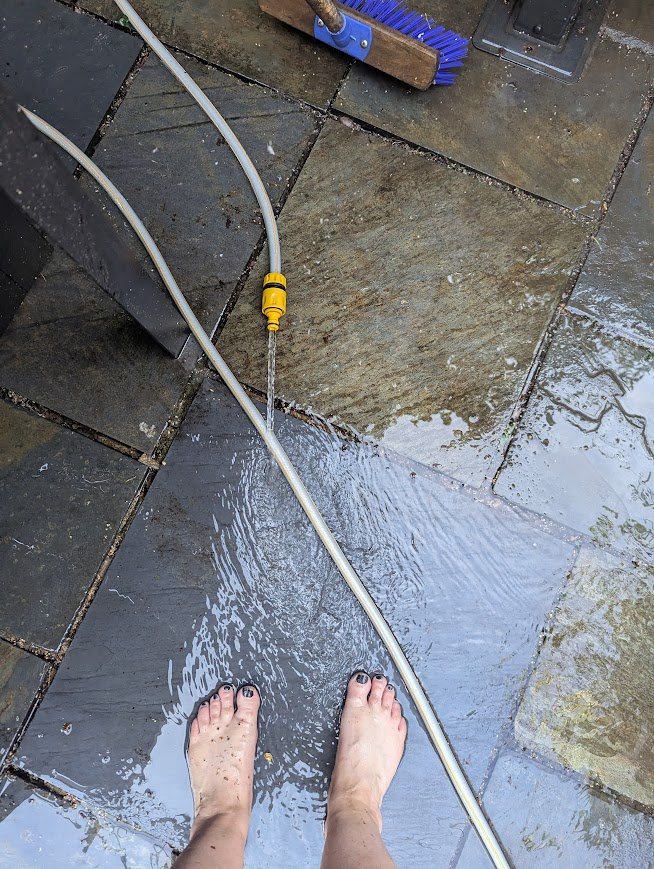
I’ll do anything to cool down- even wash the patio
So, not being in either category (yet), and to expiate my Victorian work ethic guilt I tried rearranging my routine. Charlie’s walks have got earlier and shorter anyway. We scuttle limply between shaded areas, me weighed down by a doggie drink water bottle as well as the the obligatory snack and poobag pouch. Neither of us is able to hide that we are in fact desperate just to end this superheated farce and get back inside.
Following this poor excuse for a walk I try to garden in the early(ish) morning in the shade, but collapse magenta faced and sweat soaked onto a sofa by 11am. And that’s it for the day, apart from moping around the place eating ice lollies and complaining about the heat.

It’s just too hot to do anything…
In the evening it’s all I can do to get some water onto anything that looks about to die of dehydration. Including me.
June hasn’t been a complete garden write off though. I managed to harvest some delicious first early potatoes and plant out tomatoes, with some dwarf bean seeds poked in between (immediately contributed to by a huge illicit poo dump from Bad Boy Charlie). The tops of the potatoes had completely died back in the heatwave of late May, so I was really pleased to get a usable harvest.
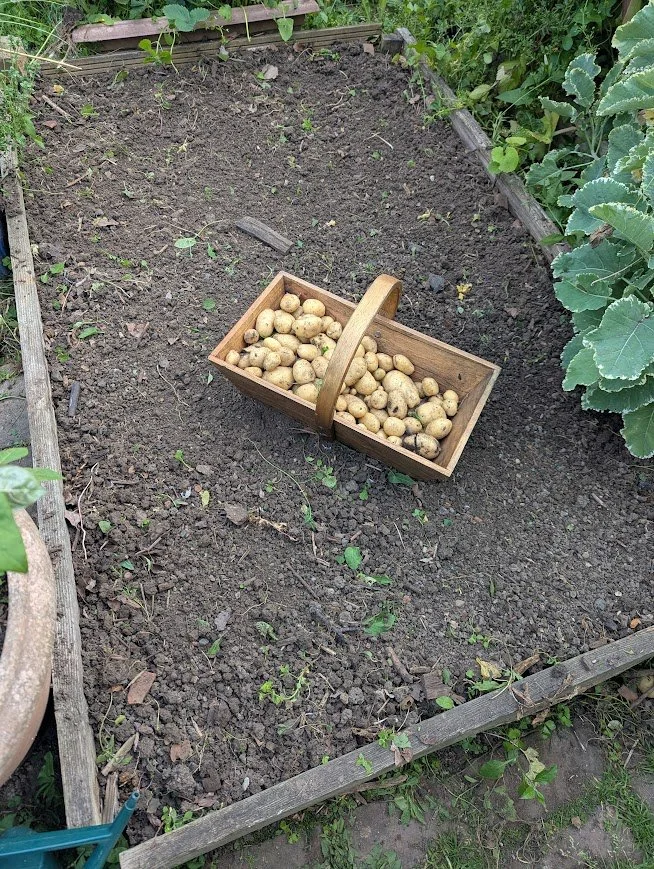
Potato Harvest
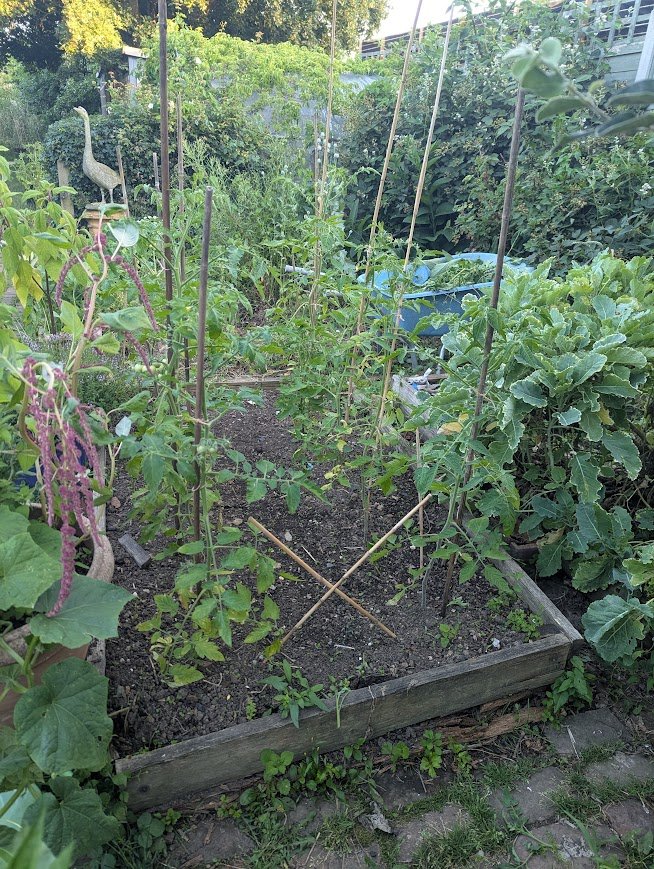
Summer tomato crop
Two out of three’s not bad
I also planted out winter squash and popping corn plants this month. Popcorn is now designated a superfood because it’s a wholegrain, and popping varieties are usually old and have less messing around with than the newer sweetcorn types so have more nutrients. As long as you pop the corn with hot air, adding no oil, butter, salt, or indeed any flavouring of the kind that may make it worth eating, then it’s good for you!
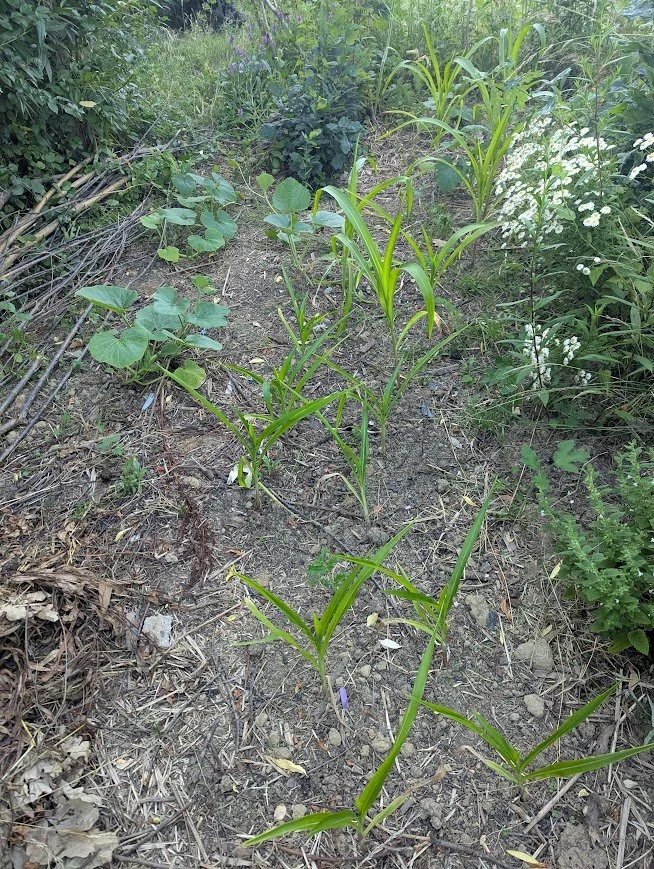
Corn and squash- 2 little sisters at the moment
These are two of the three sisters of indigenous American fame, the other being beans. Celebrity gardeners have alot to say about the three sisters method and infer it’s directly transferrable to modern weekend veg growing.
The three sisters method has it’s origins and use by the mesoamerican peoples (Olmec, Aztec and Maya empires) and was a field of mixed and complementary crops for autumn harvest, storage, and winter food. With the disintegration of the Aztec civilisation the smaller tribal cultures who survived them continued the practices.
I love reading about indigenous agricultural practices. There’s a brilliant description of food growing and preserving of the Hidatsa people in the book Buffalo Bird Woman’s Garden by Gilbert Livingston Wilson. Braiding Sweetgrass by Robin Wall Kimmerer adds wonderful ethnobotanical details of the Potawatomi and other tribes and describes the three sisters in haunting evocative language. And Saving Seed Preserving Taste by Bill Best gives an insight into how the immigrant settlers in the Appalachian mountains adapted their farming, food growing and seed saving to these new world crops and indigenous techniques.
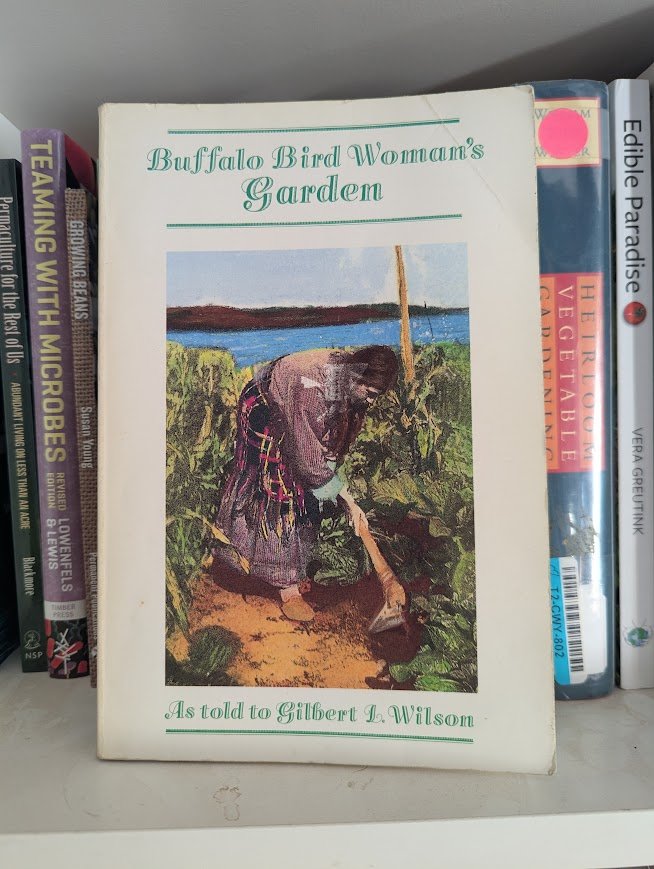
A brilliant book
Proper corn, by which I mean robust 7+foot rugged examples of Zea mays, was planted in small clumps (sometimes with a fish buried under it) with equally robust climbing beans around them to use them as a trellis and, being legumes, drop some nitrogen from their roots to give the hungry corn a boost, Then winter squash plants between kept the ground covered, cool, and weed free.
The three sisters grew together through the summer season and were all harvested together in autumn then dried and stored for winter food. The cobs, shelled beans and slices of dried squash were stored in caches, often underground.
So we are not talking runner beans strangling your fancy but frailly overbred F1 variety super-sweet sweetcorn whilst undetected courgettes lurk huge and bloated to pop underfoot as you tiptoe in to try to harvest something. Doing this with summer crops doesn’t work, no matter how many celebrities recommend it.
In other news the only really shady garden area in the morning is also looking better because it was the only part of the garden cool enough to bear working in, and all my busy lizzies and juvenile castor oil plants are in position.
And I saved a little sparrow from behind the kitchen sofa. Moving a huge sofa to catch a tiny bird in the middle of a heatwave isn’t to be recommended.
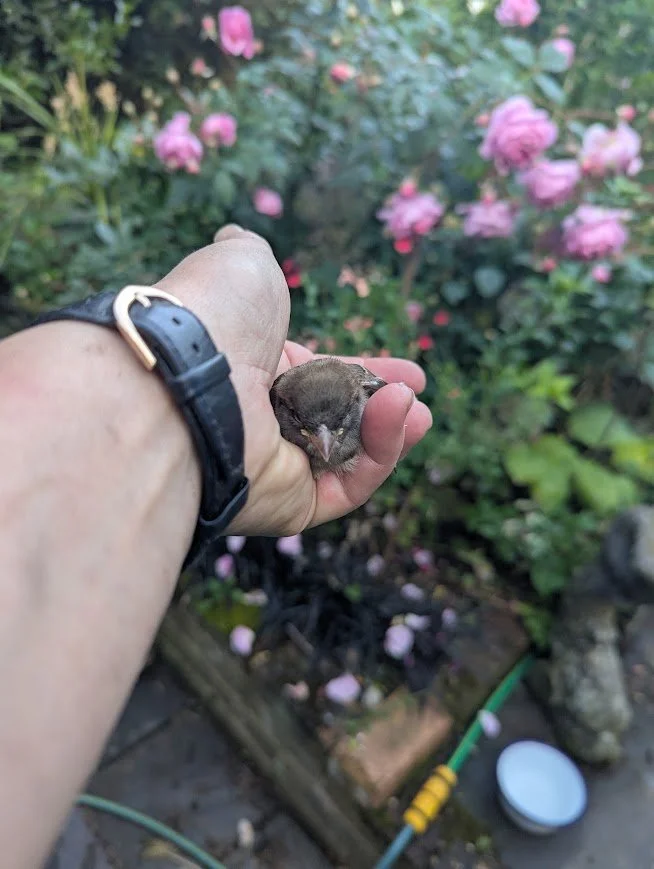
A bird in the hand..
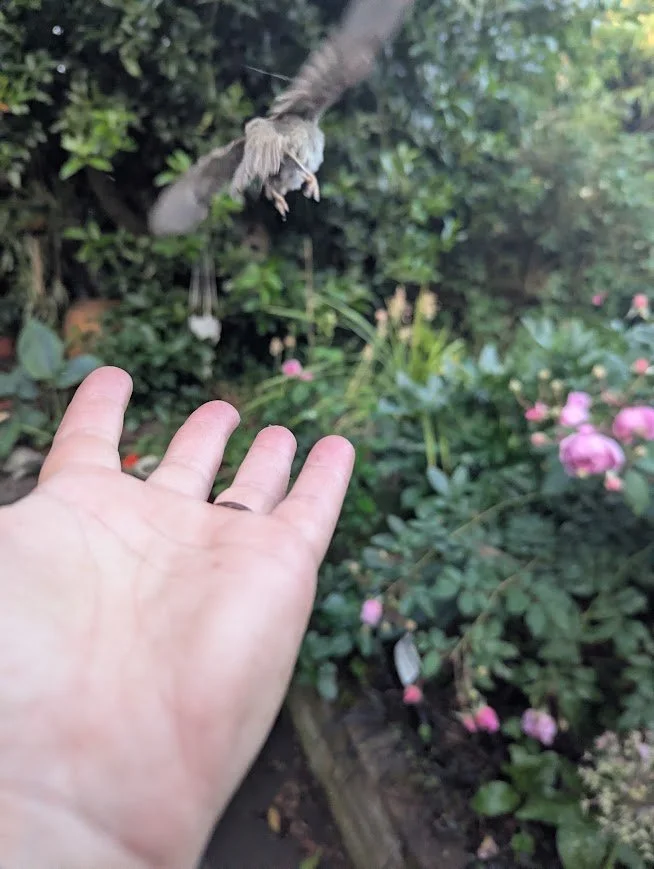
Is worth moving a sofa for.
Meadowsweet- fun facts and a huge beetle
After 3 failed attempts June saw me finally give up trying to germinate some meadowsweet (Filipendula ulmaria) for my Herbal Medicine Course. Then a few days after I’d flung the last barren seed tray onto the compost the road verges erupted into a glorious froth of creamy, dreamy, meadowsweet blossom. I’ve never noticed it before because I’ve only just learned about it.
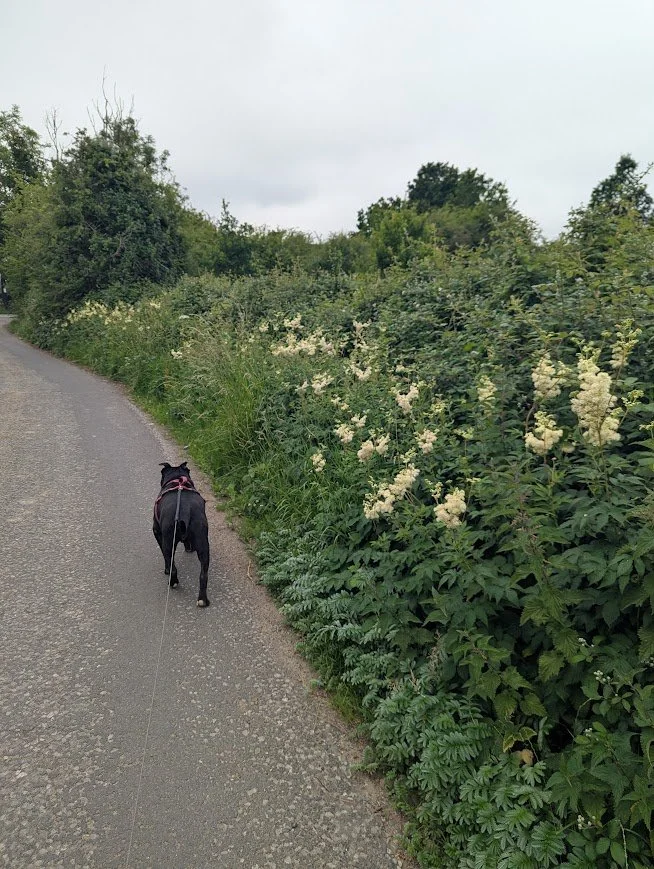
The verges are frothing with Meadowsweet
Meadowsweet is an important scented herb, food flavouring and also folk medicine, being strongly anti-inflammatory, pain relieving, and good for digestive issues. It’s use has been recorded back for thousands of years.
Although it grows in damp meadows, the name Meadowsweet is actually a derivative of the medieval name Meadesweet, and it’s been used to flavour both mead and ale from the Neolithic age onwards.
Despite willow bark being better known for it, Meadowsweet was the first source of salicylic acid, better known as aspirin, which was purified from it in the 1870s and commercially named after the plant’s then botanical name- Spirea ulmaria.
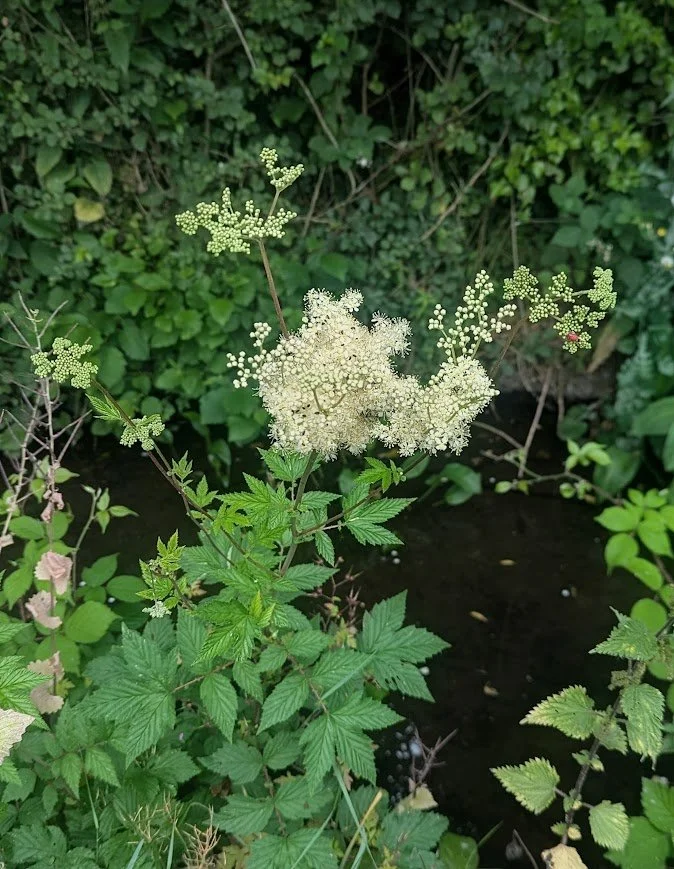
Meadowsweet- Filipendula ulmaria used to be called Spirea ulmaria
So I thought I’d gather some, and on a hot day after an overnight rain it really did smell lovely. I can see why it was also used as a strewing herb. No that’s not a typo of stewing, nice smelling plants used to be collected to chuck on the floor in olden days before people had shake n vac to put the freshness back. Or indeed vacuum cleaners.
I met this huge green beetle whilst I was there. He was stuffing his face on the pollen so didn’t have much to say for himself. I took a couple of pictures anyway and looked him up, he’s a Rose Chafer. Fabulous, isn’t he?
I’m sorry, I don’t recall..
Charlie knows the C word. No, not that one, silly, the really bad C word; the one that means you have to drop everything you want to do and go to find your Primate so she’ll stop yelling at you.
We have of course done recall training, with me cajolingly and cheerfully calling ‘Charlie, Come!’ backed up by tasty treats every time he decides to do it.
The Victoria Stillwell Postively videos on Utube stress the need to 1. Use the dog’s name first (so he knows it’s not random Primate chatter but something he needs to listen to) and 2. Be positive about these things, (understandably as that’s the name of her franchise) and make the dog want to come to you because he’ll get a delicious treat.
But it turns out not to be so simple with Charlie. Despite the clear and cheerful call and tempting lure of chopped sausage, cheese or even the hallowed frankfurter, how quickly or indeed whether he responds still depends on if there is anything at all else demanding his attention.
Anything. A distant noise, slight movement in the grass, a vaguely enticing smell. Recall remains for him the lowest priority in activity, trumped by everything else in the world. He doesn’t do it, and frankly, wishes I wouldn’t try to either.
I also know from bitter experience that even this unapologetically lacklustre response goes out of the window if anything actually interesting happens.
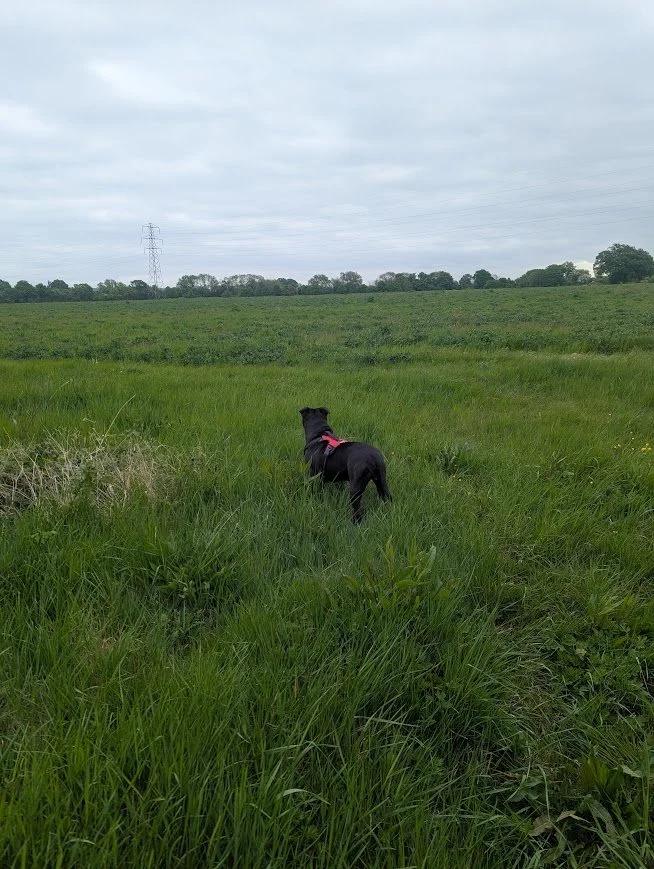
Was that a distant noise?
A squirrel, a cat, another dog or person appearing a half mile away, and he’s off with me trailing after him, yelling my head off and puce with embarrassment at this blatantly ill-trained example of my poor dog ownership skills.
‘I’m sorry, so sorry, just let me get his lead on there. Oh dear! Sorry! Charlie, no! If you could just pick her up to get her away from him? Sorry! Yes he is a bit of a humper isn’t he? Oh no, no, please don’t bend over him to say hello! Oh dear! Are you okay? I’m so sorry, your glasses! Here they are. Yes he’s got a very hard head hasn’t he? Sorry again...’
See you next month!
Karen x
