Keeping your greenhouse warm over winter.
In praise of Greenhouses
It’s true that a greenhouse is far from an essential in the vast majority of gardens. Many will have been an impulse buy, or like my first modest 6X8ft greenhouse, inherited with the house we bought.
I say my first greenhouse, but my first greenhouse experience was in my granddad’s garden as a young child, and I still remember very clearly the wash of heat, moisture and the incredible smell of tomato plants assaulting my senses when I was allowed inside.
He’s long departed now, but I wish I could thank him for starting this wonderful obsession. I also have to give him credit for always rocking the jeans. Go Granddad!
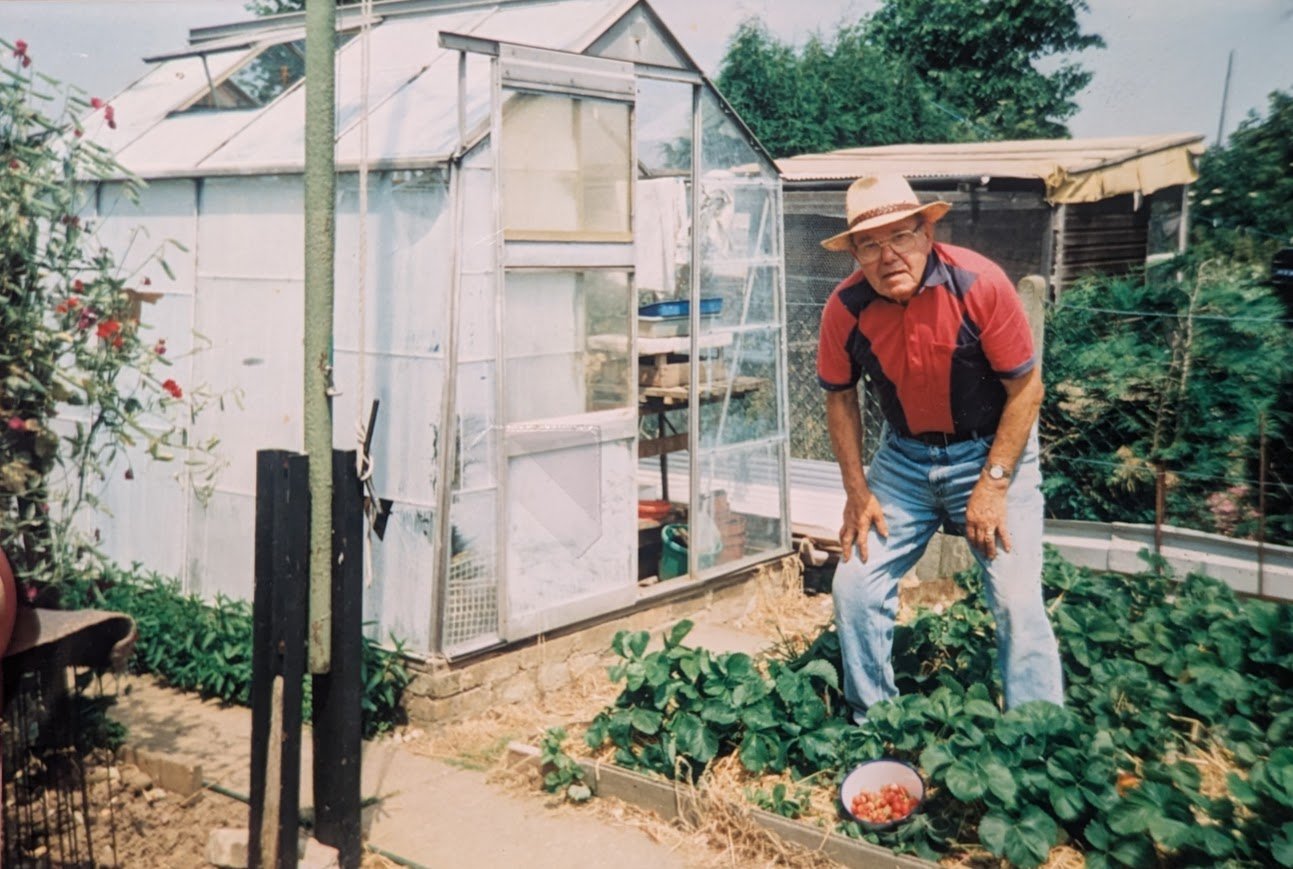
My Granddad picking strawberries by his greenhouse in the late 70s
That’s where the obsession started- I just bloody love a greenhouse. It was latent until we bought our first home in 1993, but in the 32 years since then I’ve always had a greenhouse of some sort.
After a couple of years making do with a plastic job following moving, in Nov 2005 I got a proper 10X12ft with an aluminium frame. On purchase, I was warned that Elite Greenhouses didn’t offer an erection service for one that big.
Once I stopped laughing at the double entendre I did it myself, with help from my dad in levelling a base and husband holding onto the ladder and passing up panes of glass.
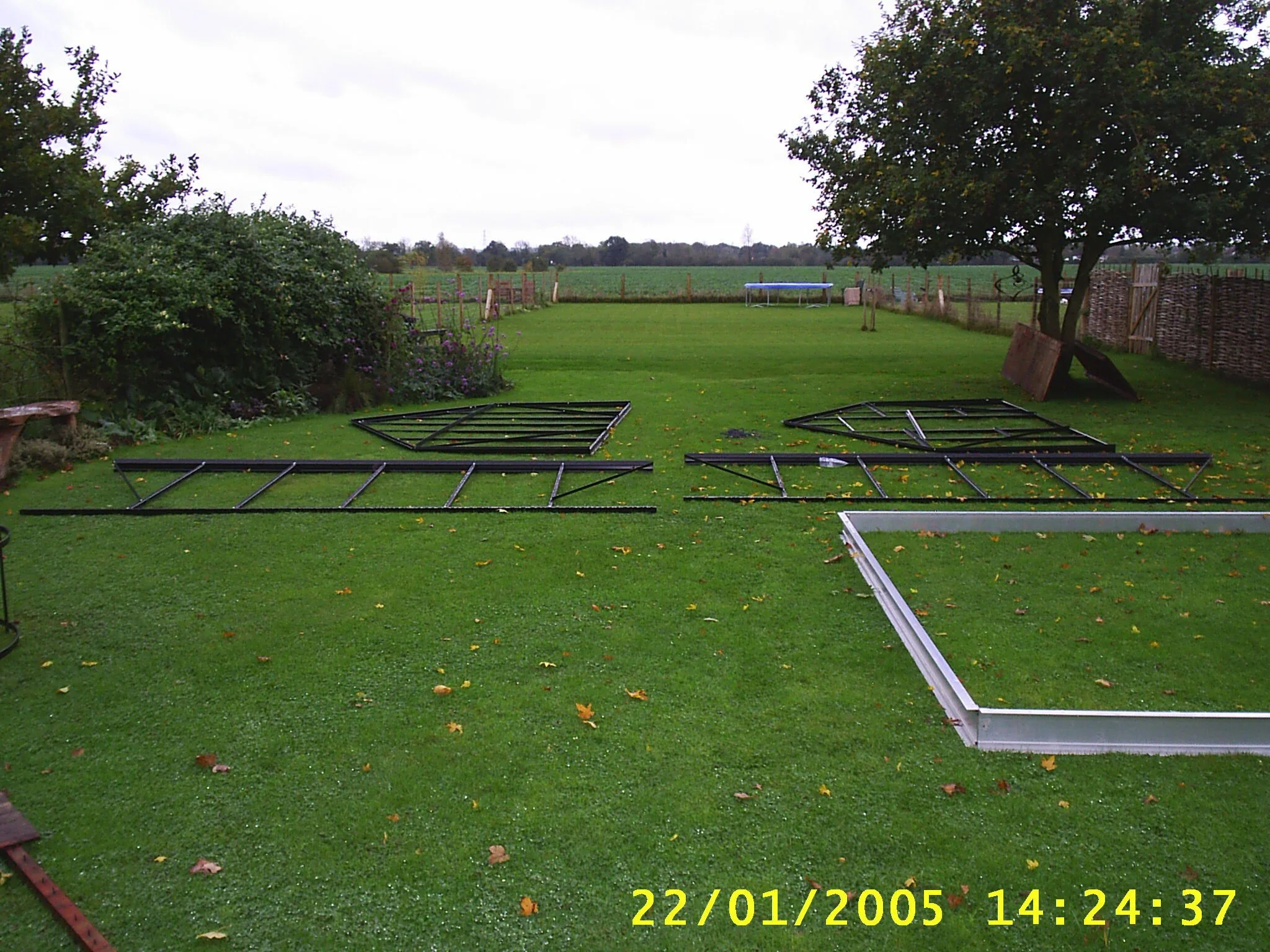
Getting the frame ready
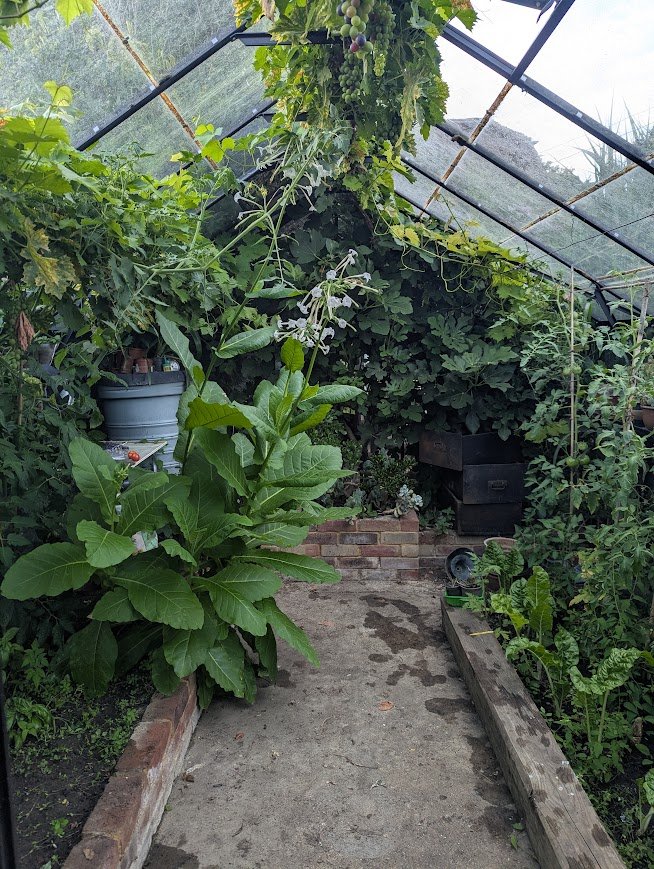
A full house including a monster Nicotiana- also featuring in my next blog
Then I planted a vine cutting taken from the Hampton Court Great Vine, a Black Hamburg dessert grape, to grow in through a gap in the base. And to those who know me, yes, I did acquire the grape cutting legally! Then a couple of years later I built some raised beds and planted a fig.
Then of course it got so full I had to get another greenhouse, so I’d have enough room to keep all my tender plants safe and sow all the seeds I wanted to.
One of the major reasons I love a greenhouse is you can keep it warm in winter. If you have a greenhouse haven’t tried this yet, this guide will hopefully be all you need to convince you to get started. And if you don't have a greenhouse, maybe you'll be inspired to get one!
Keeping your greenhouse warm over winter.
Why would you want to keep a greenhouse warm in winter?
There are a few reasons; you may have some tender or tropical plants you want to keep over winter so you don’t have to keep starting from scratch every year, or you may want to sow seeds earlier in spring than you could do outside to get a nice long growing season.
You may even want to grow food crops or flowers inside to harvest over winter.
Or keep a chilly half naked chicken warm when she goes in to moult at a silly midwinter time.
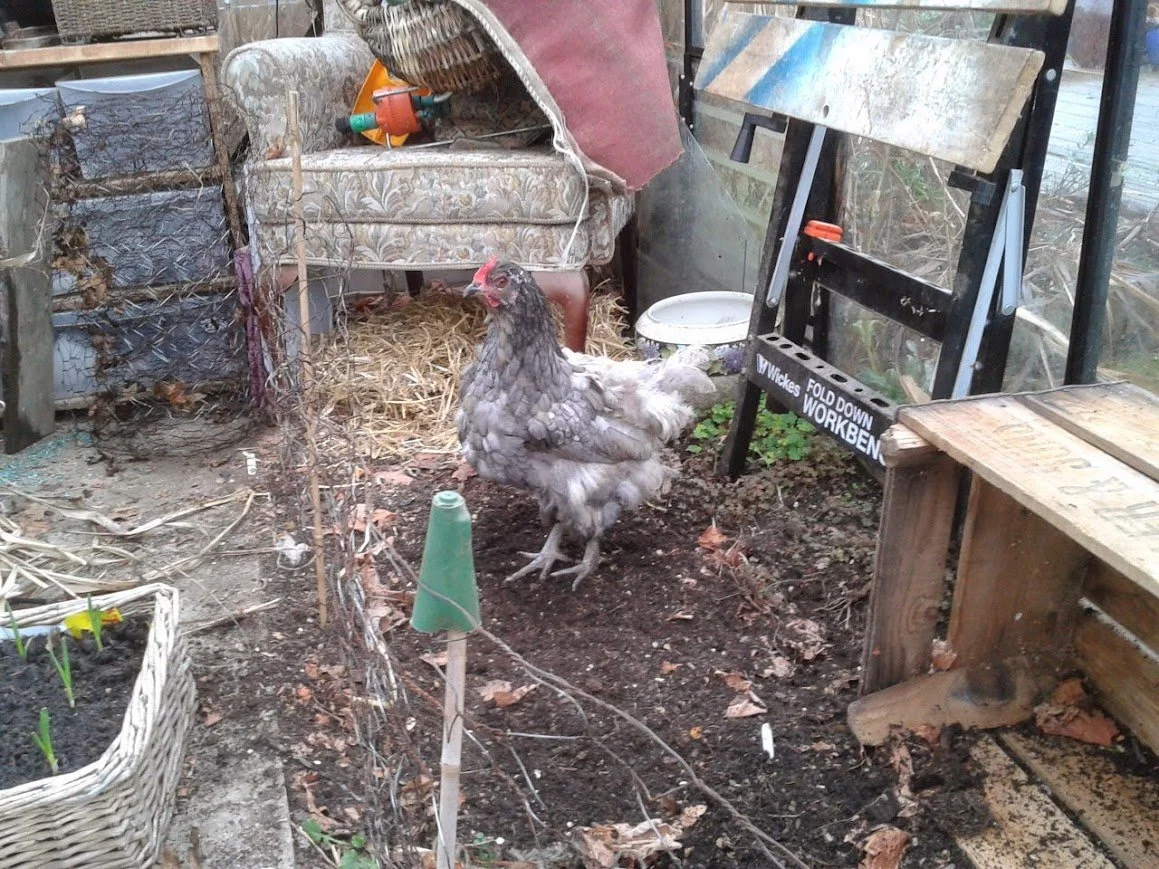
There’s also something just plain luxurious and uplifting about walking into warm, soil smelling haven full of green plants in the middle of an icebound garden. You’ll find yourself looking for excuses to stay in there.
I’ve found a heated greenhouse is also a boon if your husband goes out and locks the back door not realising you’re in the garden.
There are several ways to keep a greenhouse warmer than surrounding climes, but it all comes down to 1. Making it warmer, and 2. Keeping that heat in when outside temperatures fall.
Here in the southeast of England that means over night between mid to late December and mid-March. Through January until mid-February it may mean daytime too.
Making it warmer inside.
Firstly, greenhouses are energy traps, designed to keep the sun’s energy in by allowing visible light and some infrared to pass through their clear walls then bouncing it around inside them, transferring energy to and heating up the air and surfaces inside. They quite literally warm up on their own during the day, even in winter.
So, max on this opportunity of free energy and ensure the glazing is clean inside and out, and that the greenhouse isn’t shaded on its southern aspect by evergreen trees or walls. Remember in the winter the sun is lower in the sky so even tall shrubs by the greenhouse can reduce the energy it can absorb.
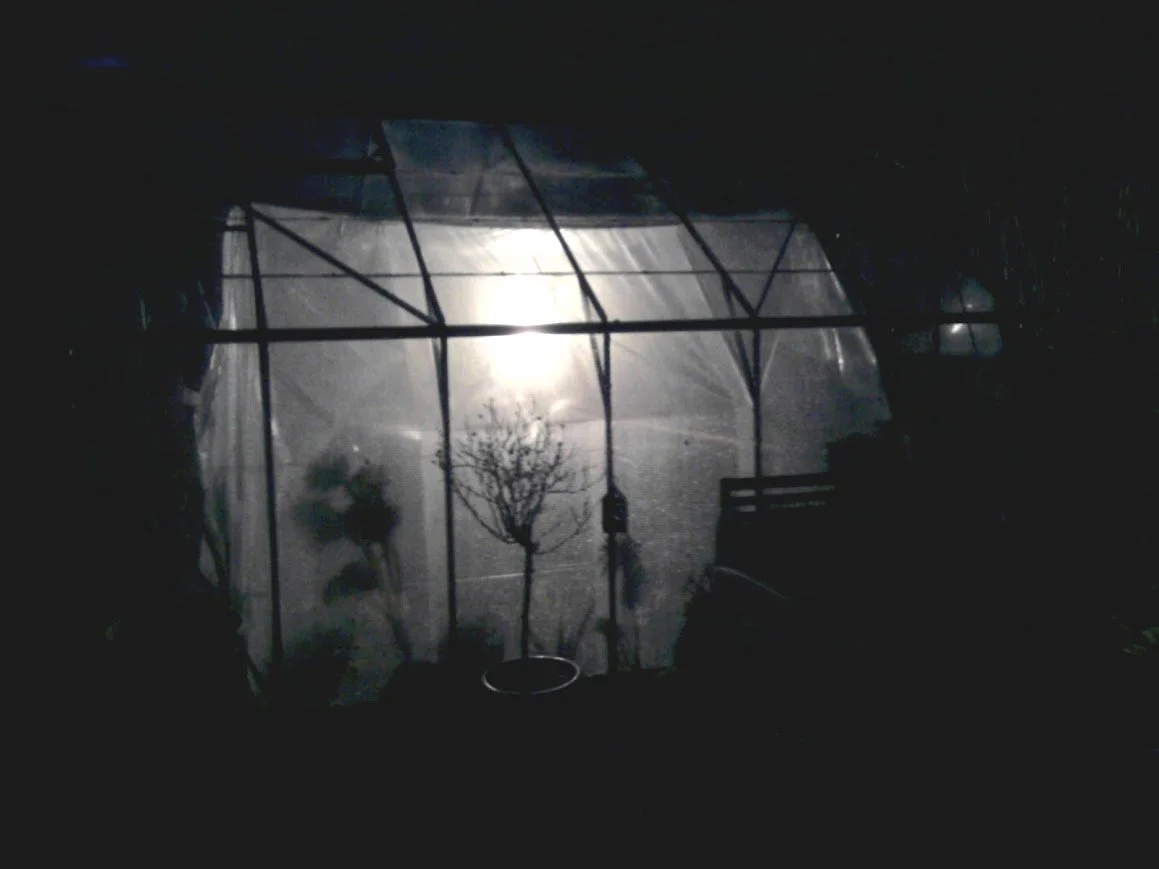
Electricity to a greenhouse can make all the difference
Secondly, put extra heat in-if necessary, and it isn’t always- with an electric or gas/paraffin heater. Obviously, you’ll need power to the greenhouse for an electric heater, but that’s my choice as fuel heaters are not thermostatically controlled and you can either waste significant amounts of energy overheating the space, or under-do it and freeze your plants.
There are other ways of adding heat. You can use heated cables to warm the soil and fleece row covers to trap that heat, you can use heated propagators or mats with their own insulation to provide areas where the temperature is higher, rather than heating the whole or part of the greenhouse.
You could light a tealight candle under a propped up terracotta pot and hope for the best.. good luck with keeping anything warm with that. Yes I know it's all over social media but the physics doesn't add up, and do you really think if it worked someone wouldn't have discovered it before now?😂
You could create a hot bed, by building a huge (1m cubed at least) stack of fresh straw and manure that will emit some heat as it rots down. I’ve never tried this as, even if I was to find a source reliably free of the dreaded persistent herbicides many people spray on their pastures, the logistics of obtaining transporting and stacking a cubic meter of horse shit in my greenhouse just seemed too much bother.
I feel similarly about other huge and expensive projects like installing a ground source heat pump. These are amazingly efficient, have a rock bottom carbon footprint, and I’ll definitely consider one if I win the lottery. A biomass (wood chip) burner hooked up to a big thermal mass like a bench made out of cob would be very exciting though!
Keeping the heat in.
Insulate as well as you can
Start with insulating the greenhouse, which prevents energy loss due to heat conduction out through the walls. and convection via draughts through gaps. So once you’ve cleaned your glass, make sure there are no holes or gaps in the greenhouse walls and glazing. Patch holes and tape up any gaps or cracks.
A clear bubble wrap layer on the inside of the glass is next for me (at least on the surfaces that receive sunlight). This creates a barrier to heat loss but still allows most of the solar energy in (but still down to 85%, and that’s why having clean glass is important so to not cut this down any more).
On North (in this hemisphere) facing walls you don’t have to use clear insulation if you don’t want to. I’ve used all sorts, including left over loft insulation, sheets of spare wood and plasterboard that were hanging around, and layers of thick corrugated cardboard. Virtually anything is better for keeping heat in than glass. If the material is light or white in colour even better, make use of that albedo effect and bounce light back into the greenhouse. You could even make this a permanent wall.
Whatever you use, ensure the insulation material isn’t touching the glass and you’ll introduce another air layer to reduce heat loss further, and ensure there are no gaps. Overlap it, and tape it if it has a tendency to gape apart.
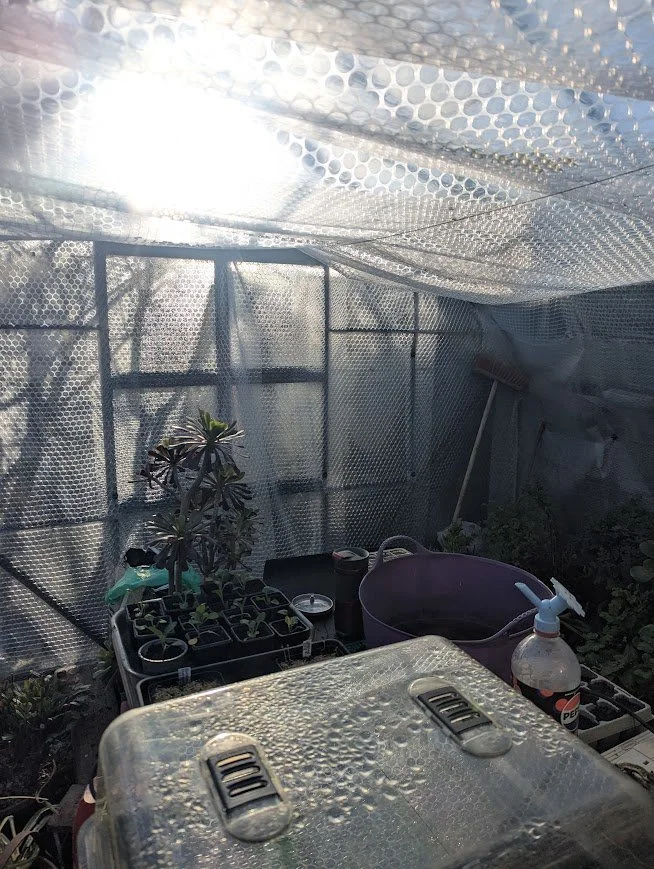
Dropped ceiling bubble wrap, door flaps, and a nice propagator
Create a dropped ceiling with the bubble wrap, there’s no need to heat the space above head height. You may want to drop a wall of it part way along too, and reduce the area you’re trying to keep warm. Bigger area means more heat needed, and more cost. No need to make it any bigger than you have to. Hang folds over the door that push aside to allow you to come and go but fall back into place.
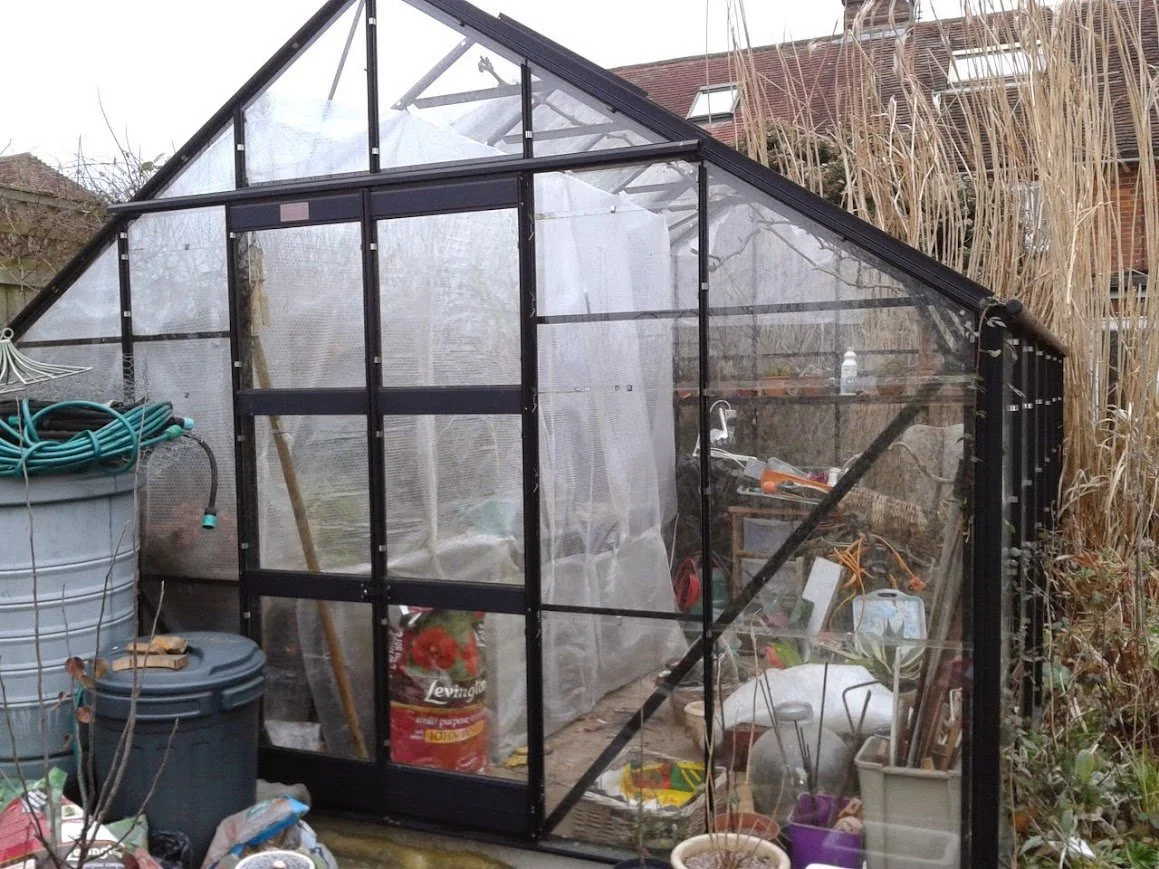
You don’t have to insulate the whole greenhouse
Use thermal Mass
The second way to keep heat in is to make use of thermal mass inside the greenhouse. Water is the king of thermal mass, but concrete, brick, stone and wet soil aren’t far behind.
Containers of water, damp soil and compost, concrete, stone and slabs all absorb heat energy and ambient heat when temperatures are high and emit it again as air temperature around them goes down. Water butts, spare bags of compost, nice damp soil beds all help keep greenhouse temperatures up overnight (and conversely help temperatures stay down during hot summer days too). So does filling the space up with plants.
So, put a water butt in, or some big cans of water, keep greenhouse soil damp, (and do not ever be tempted to insulate accross the surface of the ground inside a greenhouse). Maybe even buy your spring’s entire stock of compost before Christmas and stack the bags in your greenhouse. It’ll all help iron out temperature fluctuations.
Create microclimates inside the greenhouse
If heating the greenhouse really isn’t an option, use an additional thermal protection for vulnerable plants, some or all of the time. Garden fleece row cover put over the plants will protect them, just like it does outside. It’s also a good backup if you’re not sure your heat source will keep up with a big temperature drop.
A row cover traps a layer of air around the plants as well as any heat emitted by the thermal mass of the soil under them, resulting in at least a 2 degrees advantage over the air above it (and potentially a lot more if you use heavier grades of fleece). It’s better if it isn’t touching the leaves, use sticks or wire loops to drape it.
You can keep it on during the day and can double it up and even add a layer of bubble wrap on top at night. This will cut down the light hitting the leaves even more though.
Winter market gardeners will just use unheated polytunnels and row covers without heating the air to produce fresh vegetables and salad greens in mid-winter. I find it doesn’t suit all plants, though, in particular plants that thrive in dry Mediterranean climes like pelargoniums and aeoniums can rot if under fleece for too long, there’s just too little air flow around them.
A bit of Permaculture:
Permaculture principles involved in keeping a greenhouse
Permaculture (Permanent Agriculture) is an ethical design system, originally intended to help people create sustainable, regenerative agricultural set ups, but inevitably expanding to non land based uses. Permaculture principles have been used to design everything from communities, to business models, because these principles are more about creating an ethical, sustainable way to live than just how to design a garden. The three core ethics of permaculture are Earth Care- care for the planet and our environment, People Care- ensuring people have access to the basics of a good life, and Fair Share- using resources responsibly, only taking what you need, and sharing excess fairly rather than hoarding it.
Design principles outlined by Bill Mollison and David Holmgren (the two fathers of Permaculture) give us a structure to build onto to try to meet the three core ethics when we design permaculture systems.
You can read more at https://www.permaculture.org.uk/what-is-permaculture
So how am I doing with my greenhouse set up?
A greenhouse itself, and any extra thermal mass you add is a good example of the principle ‘catch and store natural energy’ and also helps with another: ‘obtain a yield’. It also fulfils another: ‘stacking functions- one element in the design performs many functions’- when I use it to germinate seeds, grow crops and keep plants (and occasionally myself and various cats) warm.
But how about heating it? There’s no doubt that I use more energy this way than just insulating and covering plants with fleece and hoping for the best. But in using thermostatic controlled electric power I ensure I minimise energy use, and mitigate this by choosing an energy supplier ranked amongst the best power companies supporting transition to green energy. I prefer this to using fossil fuel in a paraffin heater for now. I do like the idea of building a thermal mass bench and incorporating a woodchip burner or rocket stove in the future though!
By growing from seed starting earlier in the spring, I obtain a greater yield, and by using my homemade compost I save resources of plastic pots and peat based compost in bought plants. Growing my own veg from seed also reduces what I have to buy, along with the plastic use and air miles used to produce that. The Principles ‘Use and value renewable resources’ and ‘Produce no waste’.
Ideally I’d like to be electricity free for the heating at some point, or connected to a a solar panel or maybe a small wind turbine. So far though, my first choice of heater is a cheap fan heater combined with a thermostatic plug set to a nice narrow range (say 6-8 deg Celsius) so it really does use the minimum power necessary. There are radiant heaters, and these can use less power, but especially in large greenhouses they can leave cold spots as they rely on convection to spread the heat around. A fan heater keeps the air moving, which I think may also help reduce the risk of fungal problems.
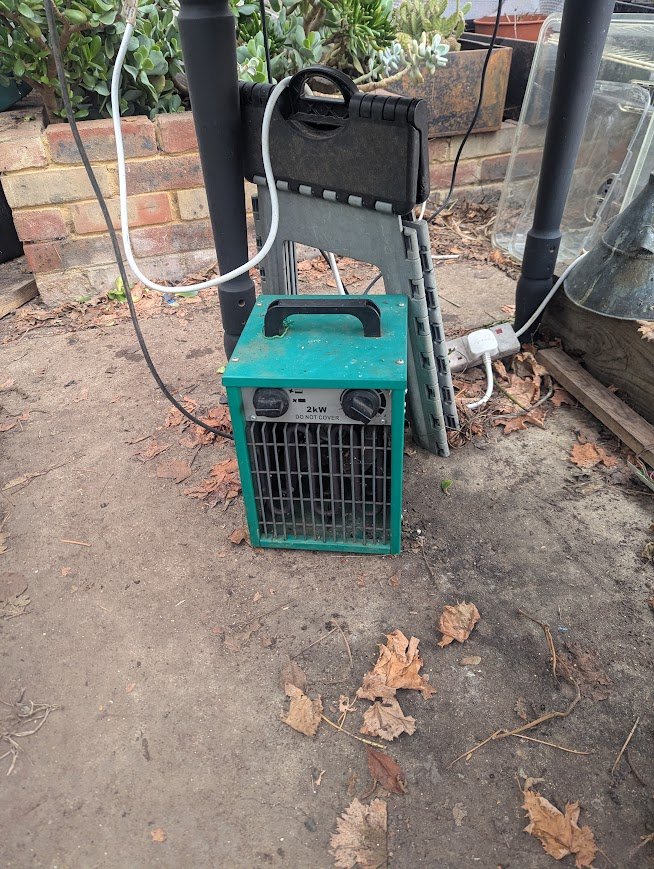
Greenhouse heater
I’ve also got a couple of propagators for starting seeds and a heat mat for growing on tender heat lovers like tomatoes. These can be turned off when not in use of course.
A nice roll of 750mm large bubble packing wrap is cost effective and will last a few years if handled carefully and put away out of the sun for the summer. It clips to the frame of my aluminium greenhouses very neatly with little twist clips made for the job.
Both greenhouses sport a dropped bubble wrap ceiling and folds at the door. In the big greenhouse I drop a wall in front of the fig at the end as it doesn’t need protection, and neither does the vine running along the ceiling.
I have a water butt and dipping bin, a raised and flat soil beds I keep well-watered, bags of compost and part of the floor is concrete slab, so lots of thermal mass going on in there. I open up the greenhouses if temperatures get up to 9-10 degrees outside to give them a blow through, otherwise they are closed in winter. And there’s always a bunch of garden fleece around to use as double protection for colder nights.
Lastly I like to include a chair so I can sit down whilst I’m waiting for my husband to get home and let me back into the house.
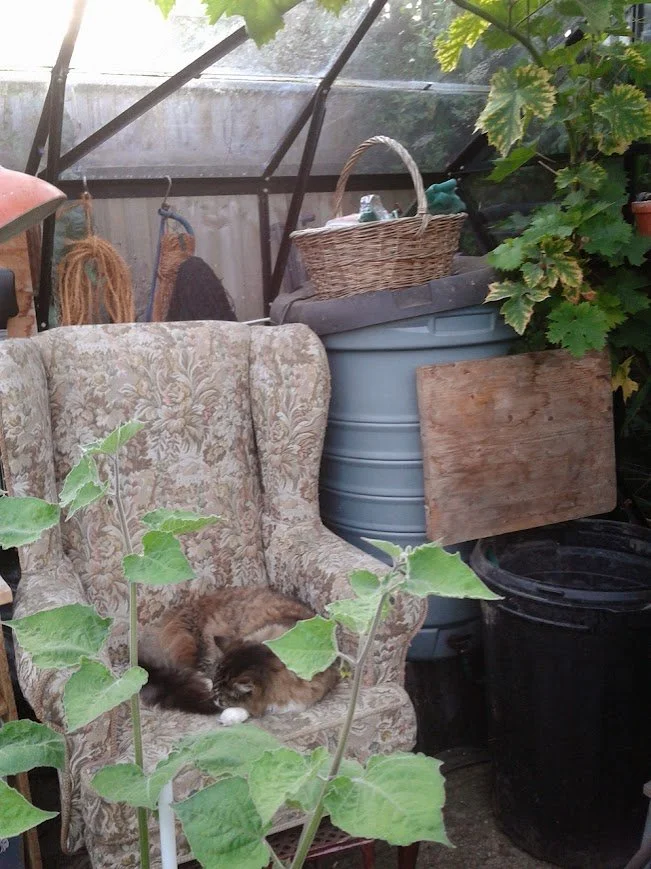
A chair from a few years back
I hope you’ve enjoyed touring the greenhouse with me, and would like to hear any comments!
