January: Joys and jobs
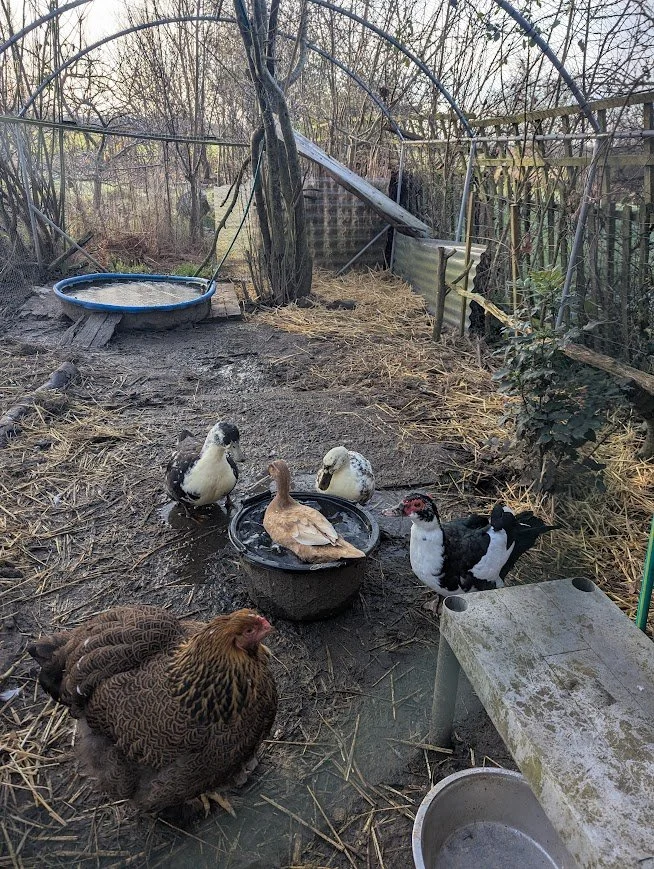
There’s always one who wants to bathe in the drinking water
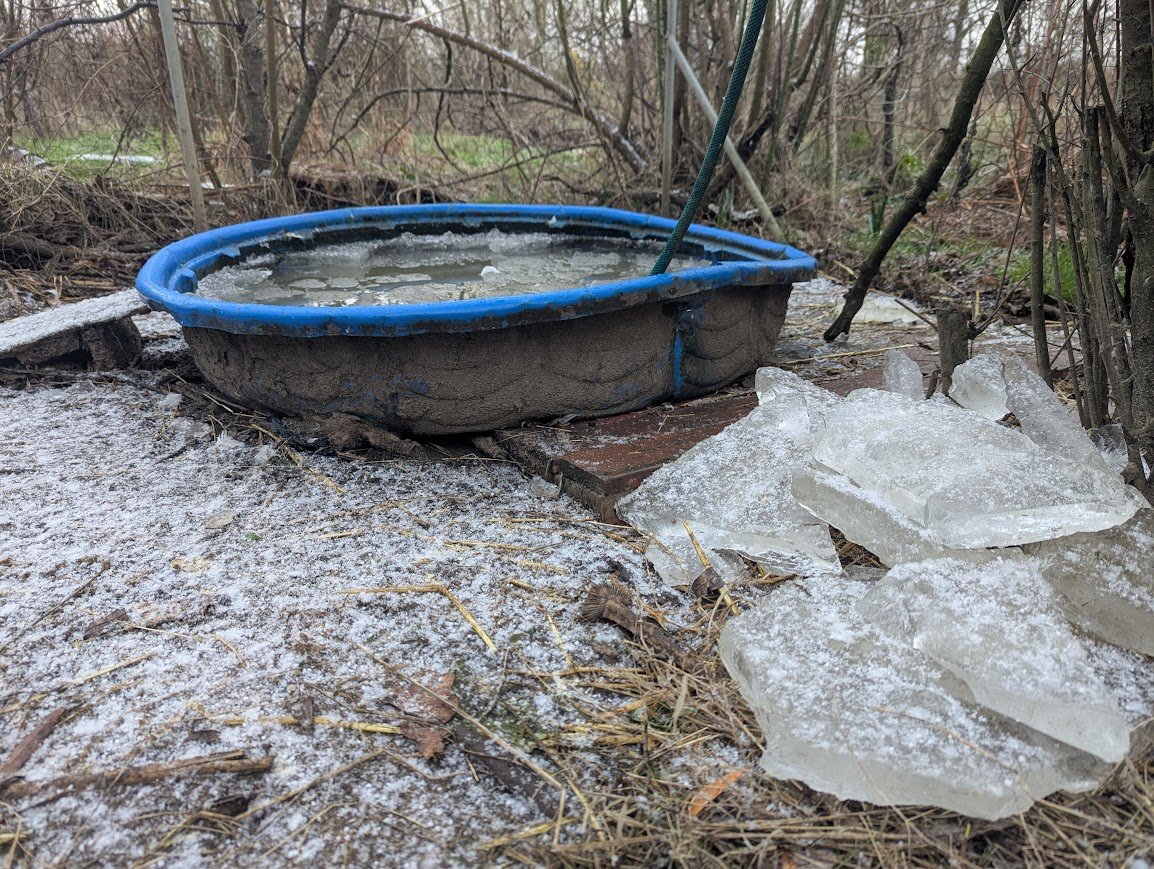
Frozen hoses and slippery paths signal the start of the bleak midwinter at the Henitentiary. Frosty winds are making moan, obviously, and the earth is standing hard as iron as expected, but for us it’s the water’s stone-like grip on my intricate system of hoses that’s the real pain in the arse.
Frozen hoses weather means getting water to the Henitentiary inmates is a twice daily skate down perilously icebound paths loaded with watering cans, always at risk of being shouldered aside by Charlie if he decides that’s where he wants to walk at that moment in time.
I don’t dare try to use the hoses again until I’m sure they’re all thoroughly melted. Impatience in this area last year resulted in catastrophic popping and gushing of still partially frozen multiway diverters, followed inevitably by their demise and expensive replacement.
I've already had to replace one bit of overhead pipe this month, when after a freeze it collapsed in on itself almost like shrink-wrap.
Luckily it didn't pop another diverter before I noticed it. Whilst I was waiting the couple of days for the reinforced hose replacement I couldn't get fresh water to the duck pond (aka child’s paddling pool).
The ducks were outraged at this lapse in the standard of service and started to bath in the drinking bucket. Not like they ever need much of an excuse.
Any liquid ducks can reach is immediately and enthusiastically bathed in, pooed in and treated to numerous beakfulls of mud, and not necessarily in that order. Even a cup of tea isn't safe (yuk!).
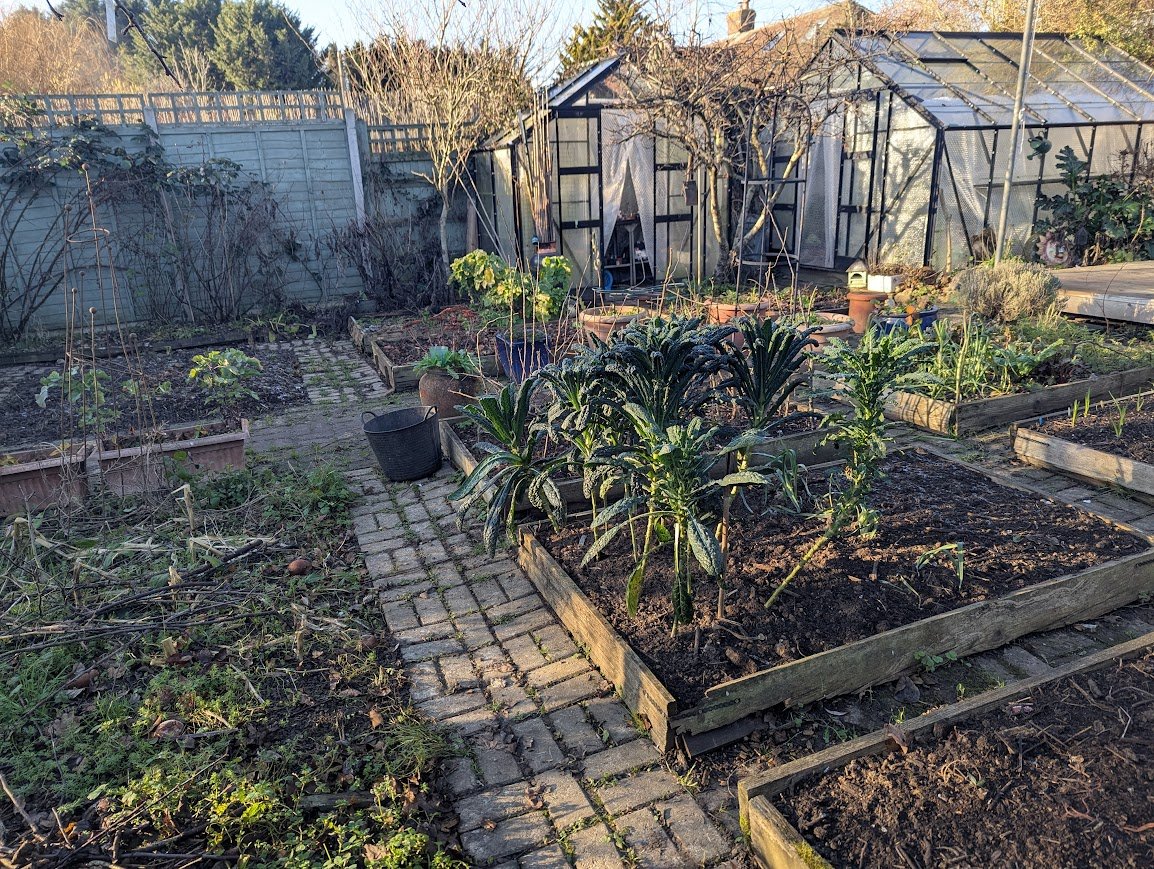
Raised veg bed sides have seen better days, but will hopefully last another season.
Despite this downer, the rest of the garden is much more respectable than it’s been in the past, the benefits of retirement and more time spent in the garden are definitely paying off.
The veg beds are (mostly) repaired weeded and mulched, greenhouses bubble wrapped, and the tender plants are in (to the greenhouses or indoors).
All but this one, I spotted it last week.
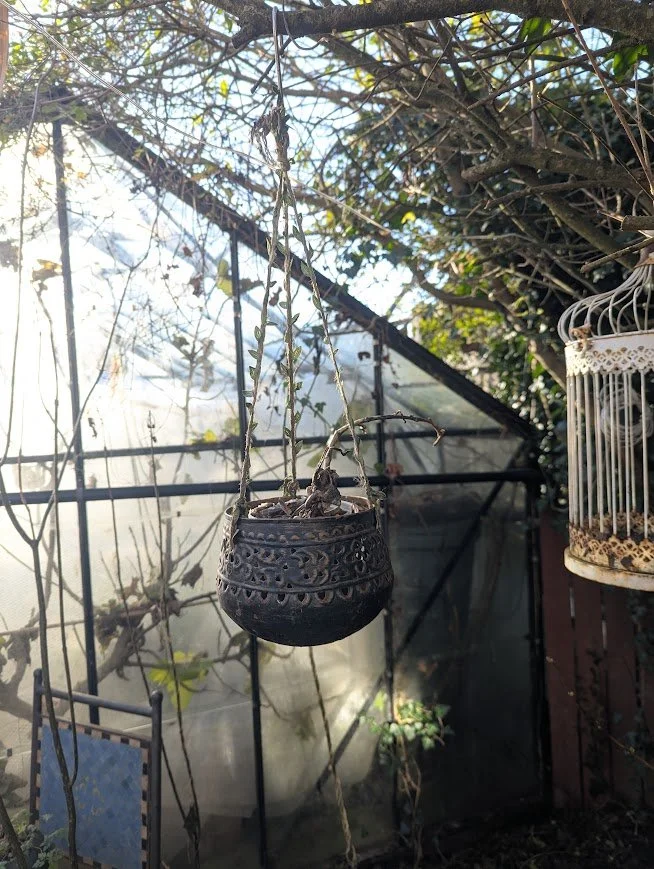
Ex orchid
It was an orchid, once😩.
Moving swiftly onwards!
January Jobs
Weeding and mulching veg patch and borders.
This is a gradual job for me, starting in October and going on through the winter. As long as the soil isn’t frozen, you can weed it- so no excuses! Layer up the clothes, get a thermos cup of tea/coffee/gin and tonic, something to kneel on to avoid soggy jeans, put on a good audiobook and have at it. Or alternatively take the easy way out:
Gold standard weed and mulch- the importance of covering the soil surface
This is how I do it when time and enthusiasm are in generous supply. No dig is a non-negotiable. I use a fork to loosen but not invert the soil, just enough so the weeds come out when I pull, then shake off as much soil as possible before they’re off the the compost. I’ll keep an eye out for self seeded useful plants to move elsewhere.
Then I spread a couple of cm of garden compost to mulch. But even if the only thing I have to mulch with is the weeds I’ve just pulled or some leaves, I always cover the soil after weeding.
So what is mulch and why is it so important? So glad you asked! A mulch is a covering for the soil surface. It can be inorganic like gravel, pebbles, weed suppressing membrane or heaven forbid that old carpet you just chucked out. Organic mulch is anything that's alive or has been once- leaves, pulled weeds, compost, woodchip or bark, stable manure, coconut shells…
Yes, yes, fine but why is it so important? Look, I know freshly cleared soil looks great, and is a splendid, visible testimony to all your hard work, but to leave soil bare is to expose and damage the structure of the top few centimetres and encourage more weed growth.
UV rays from the sun will blast the exposed soil surface, frosts will attack its structure, and rain will hammer at it, beating it into a flat, dead, muddy crust, all soil organisms having died or scarpered. Honestly it’s a microscopic Armageddon.
Then if it hasn’t already dried up and blown away or been washed away by the rain (an estimated 2.2 million tonnes of topsoil is lost to erosion in the UK every year), a few weeks later a verdant flush of fresh weeds inevitably bursts forth to laugh in your face.
These ‘weed’ seeds are always in the soil, and can stay viable for decades and longer. Their other name is Ruderal Species, meaning out of the rubble, and their job is damage limitation after injury to the soil. There’s so many of these seeds in every square cm of soil they’re referred to as the soil seed bank.
They're stimulated to grow by light when the soil is uncovered, and there to quickly re-cover and protect the soil from further damage and erosion. They are the soil’s first line of defence and the only way to dissuade them from doing their thing is to cover them up again as soon as you expose them.
Quick and eco-friendly alternative to weed and mulch
If all this sounds like a complete pain in the arse (and I’ve been there, believe me), there is a perfectly viable not to mention soil and wildlife friendly alternative. It’s a win win, I’ve used it, it works, and here it is:
Just cover the lot with cardboard, as it is, weeds and all. That's it. It will work just doing that. Kill the weeds whilst protecting the soil, without chemicals, weeding or digging.
If you want bells and whistles you can spread any compost you do have first. You can even dig out half rotted compost from heaps or bins and spread this on the soil. You can empty out all your old tomato grow bags and plant container compost and spent plants into this too.
Mix it all up and level it out and put on the cardboard. Then weight, water and wait: Weigh down the cardboard, water to keep it moist, and leave until the spring when you’re ready to plant.
This method will give you a great start to the growing season for very little effort put in now. It will feed your soil through the winter and protect it at the same time. Most of the weeds will die, but you can dig out the deep rooted perennials in the spring if they poke through.
Lift the cardboard in the spring and rake off any more obviously un-rotted and identifiable bits of egg shell, melon peel and junk mail to return to the compost heap. Or cut holes in the cardboard and just plant right through it all and hide it with a compost mulch on the veg bed or a decorative bark or chip in a border.
A few words of caution on leaving cardboard down- beware if you leave cardboard that hasn’t been wet enough to get a bit soggy on your mixed borders, spring bulbs may struggle to get through it.
It can also harbour slugs so if you’re putting in vulnerable plants cut back a wider hole in the cardboard for planting and add a ring of whatever slug prevention you prefer. I like ducks for slug prevention, but understand that they’re not everyone’s cup of tea.
I’ve also had field mice and voles finding a nice cosy home under cardboard weed mulch, and removing it later than the start of spring may expose their little nests, which is very sad. Especially if they get chased down and eaten by your chickens. Think Jurassic Park, the velociraptor scenes and you won’t be far off, chickens are proof that dinosaurs really did evolve into birds.
January is for Planning and dreaming.
A very important January job and a great opportunity to buy or repurpose a nice new notebook.
I find looking through the last few years photos of the garden is a great start. All sorts of memories and ideas start to come back. I do keep a garden journal but who can be arsed to read through that? (Note to self- keep an ideas and inspirations list). Whatever works for you, get the creativity flowing before you tackle the seeds.
Turf through and organise seeds already in your collection. If this is your first year of growing seeds, check my next blog which will have a list of really satisfying first time sows and grows.
If you do have a stockpile, be ruthless, chuck out any that are more than a couple of years past sow by- seeds are cheap in the scheme of things and life is precious. Don’t waste a year of yours on old seed that won’t sprout quick and strong and make your heart glad.
Collect all your old seed and chuck it out for the birds. If you never used some packets at all, thank them for this lesson not to buy them again (I’m a big fan of Marie Kondo).
Then check out the seed catalogues and restock. This year I’ve loved shopping from Premier Seeds Direct, Plant World Seeds, and Yorkshire Seeds.
I’d like to say I always have an eventual destination in mind for the seed I buy but that would be a BFL (Big Fat Lie) as I shop seeds with my heart. I’m talking about ornamentals here, I only grow veg I like to eat, and tastes better than you can buy. Or veg you can’t buy- as long as it tastes good. In veg growing as in life, just because you can, it doesn’t mean you should, as anyone who’s grown and eaten a cucamelon will attest to if they’re being honest.
Don’t just sit there, Sow something
Even if it’s a selection of chilli seeds in pots on a windowsill, some sweet peas in toilet rolls filled with compost and tucked under a hedge or next to the house for protection. Or pull out the stops and get to it with some tomato seed, way too early.
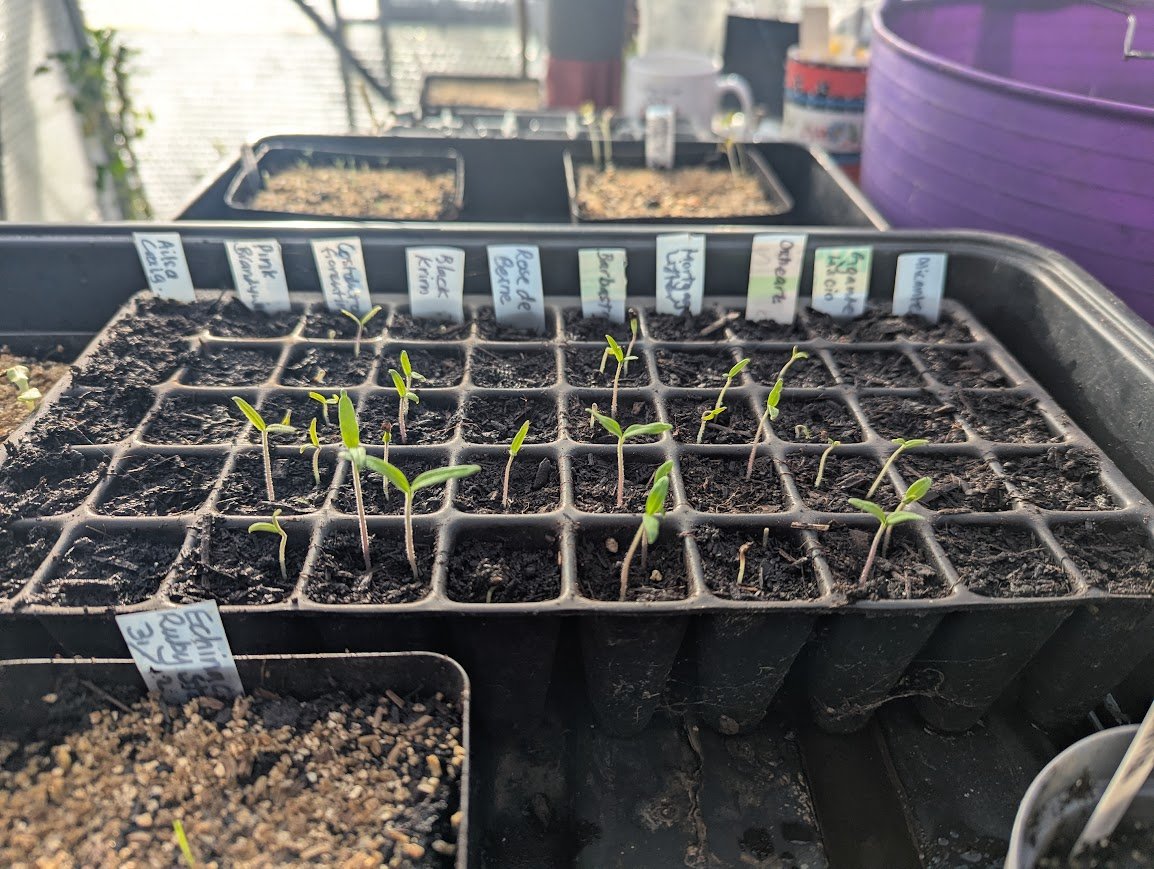
Foolishly early tomato seedlings- or are they??
Why? Because as we already know- life is short and seed is cheap. January can be a bit meh, (especially if you are still clinging futilely to your New Year’s resolutions) and sowing seed is an expression of hope and an investment in the future.
Also, admitting that you failed, early sowings wilted and died, and you are an impatient idiot is refreshingly character building and also very brave. So the questions should actually be Why not? and What are you scared of?
January’s Joy
Giving New Year’s resolutions the heave-ho and embracing the gentle quiet of the season
I looked up the definition of joy once- essential elements are a feeling of contentment, purpose and wellbeing. It's more gentle and enduring than happiness.
Dr Brian R Little (personality psychologist, author of Me, Myself and Us) equates wellbeing with what he calls welldoing- which is actually purpose by another name, but he has a bit more detail to add.
The essence of welldoing is to have a bunch of personal projects on the go. Projects that are meaningful to us rather than externally imposed by, say, a New Years Resolution list we felt pressured to adopt.
These projects can be small or big, (the examples he gives are anything from ‘putting the bins out’ to ‘saving my people’). But for us to feel the joy they have to be aligned with our beliefs and moral compass, and also feel doable, giving us a sense of confidence that we are striving for the right things, and can achieve them.

The other half of this train of thought is a seasonal reflection by Lydia Millen that I read the other day as a Q+A in Country Living mag from the library via the Libby app. She recommends a gentle schedule of self care, rest, mindfulness, and taking time to appreciate and lean into the dark and quiet of the midwinter months.
I love this idea, and I'm sad that it needs pointing out, because we have forgotten that we are a part of the world not over and above, and are governed by the same natural timetable.
Charlie knows this instinctively of course..
Every year, in the middle of winter, when our energy levels are at their lowest, countless people feel pressured generate a to do list of spurious activities that we may not even feel are meaningful or achievable. What we will feel though, is a sense of personal failure when we just haven’t got the energy to see them through.
As most of us are already working on at least a couple meaningful and achievable personal projects, perhaps the best way to be kind to ourselves is to let go of the idea that midwinter is a great time to generate a load more, and concentrate on the projects that will bring us joy.
Joy appearing near you in January:
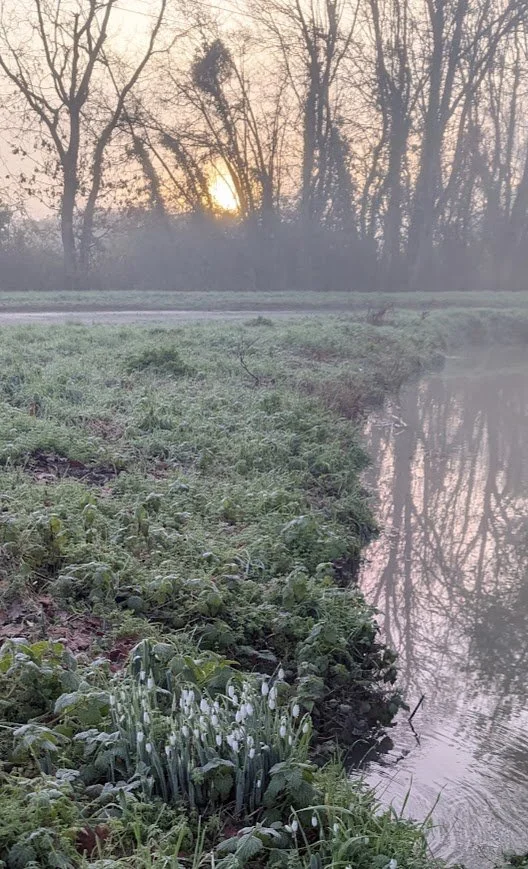
Snowdrops
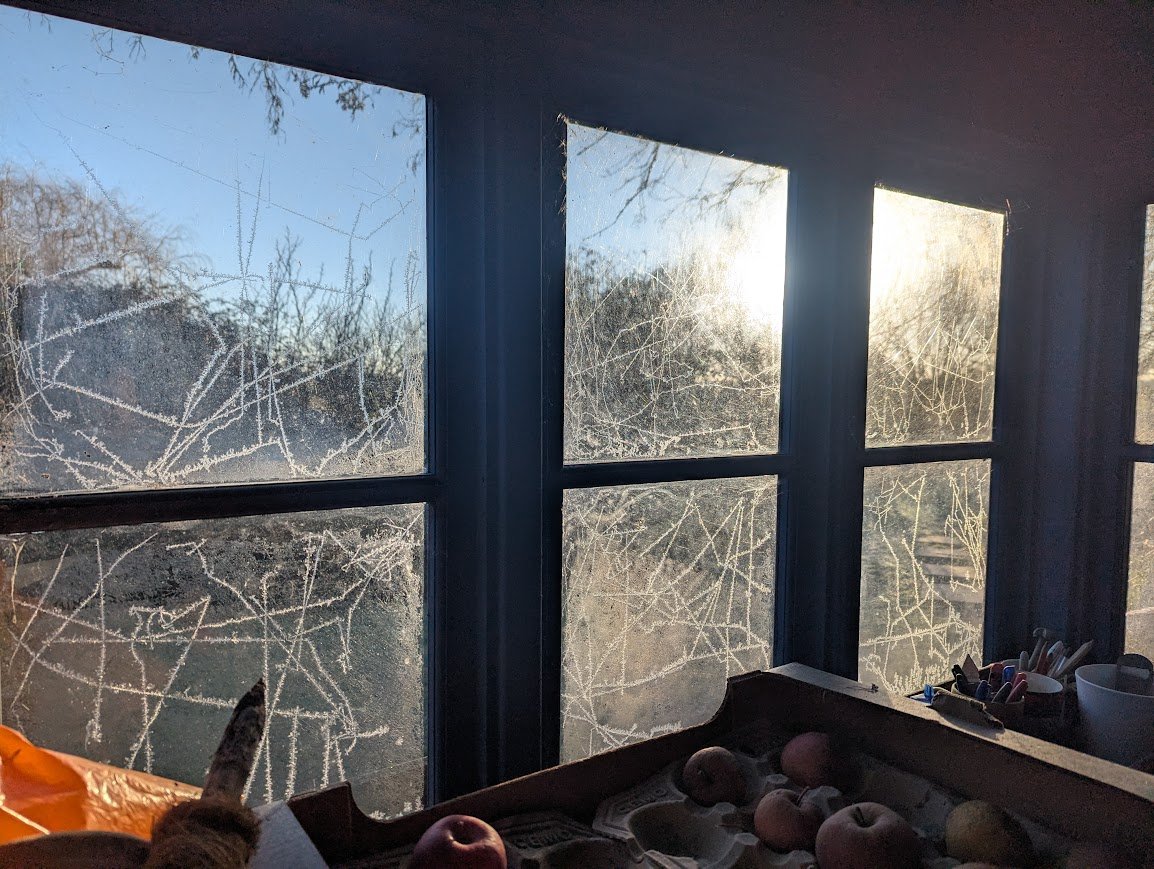
Jack Frost making patterns on the windows
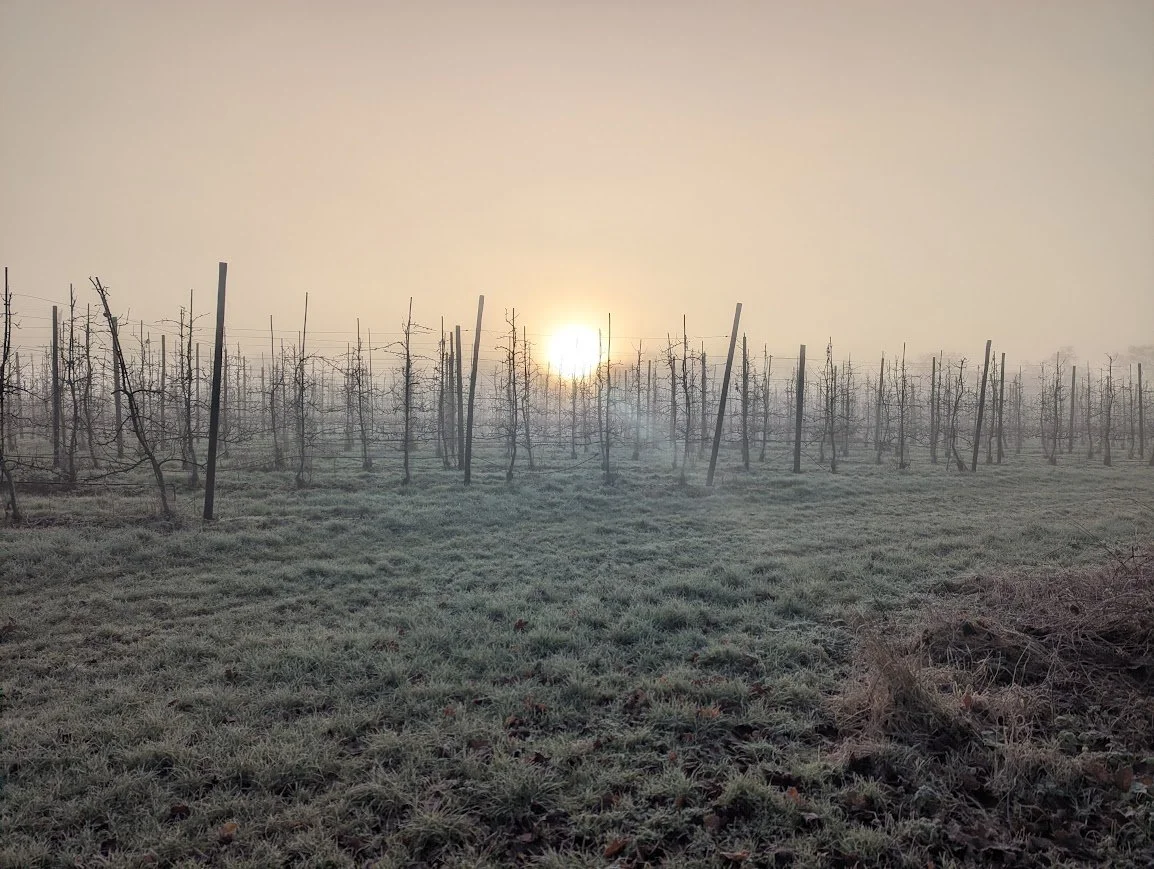
Misty sunrises you don’t have to get up at 5.30 to see
A mini murmuration of Starlings- on the Red List of Birds of Conservation Concern, so ubiquitous in my childhood but now now one of the fastest declining birds in the UK.
That’s it for now. I would love to hear your thoughts, questions, and suggestions for developing this blog, so please leave a comment. You DON’T need to fill in the URL and website prompt boxes to comment- even though it looks like you do!
Karen x
