Impressive Ornamental Annuals
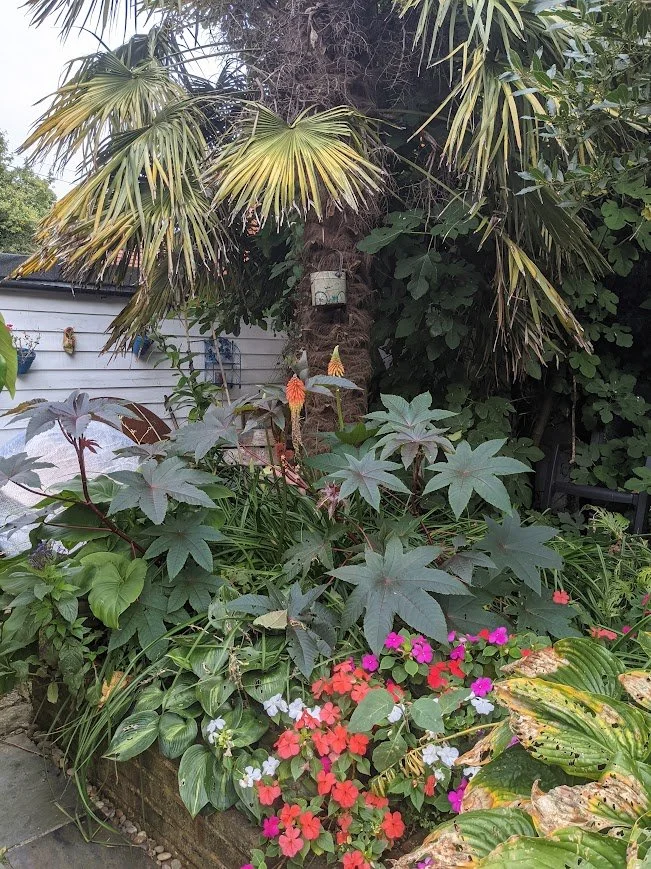
Ricinus communis ‘Impala’ and Busy lizzie ‘Beacon Mixed’ rock the shady tropical border under the Chusan palm (Trachycarpus fortunei).
I’m seeing a new ‘must sow’ list every time I dare to have a scroll at the moment. Big, impressive lists, by impressive gardening experts. There are instructions like ‘do it now before it’s too late’ and ‘get ahead for a fantastic summer garden’.
It’s all very exciting and upbeat and I really want to join in. February has been such a soggy month so far that I’m desperate to escape into some imaginary dry hot, scented summer day. I’m leaving it up to the plants to be impressive though. I do also have some epic edibles to grow from seed, but that doesn’t really start until next month, and they can wait. Now is the time I like to get my Impressive Ornamentals underway.
So, here are some seriously bragworthy, neighbour impressing plants to grow if you are looking to create some impact in borders and pots. Even better, none of these seeds are expensive, although you may have to go a little further afield on line than the T+M website to find some of them.
I’ve grown all these (and alot more), and the pictures are all of plants I’ve grown. None of these seeds need special treatment to get started, they’ll all germinate successfully, in a little pot on a windowsill if that’s how you grow, and there’s no emergency- sow them before mid April and you’ll be fine.
Impressive ornamentals that are easy to sow and grow
Busy Lizzie- I know, what am I thinking of, starting with an embarrassing 70’s bedding plant? Well, firstly the list is alphabetical. Secondly, as a riparian (water’s edge) species in it’s native Africa, Impatiens walleriana loves moist shady areas. In fact it’s at it’s best if you use it just where you wouldn’t find it in a park bedding scheme.
Added in as an understory in shade it gets none of that nasty downy mildew that troubles typical bedding in full sun, and seems to be quite slug and snail resistant too (check out the picture above, Hosta Empress Wu in right lower corner has been mullered into lace by snails but the BLs are looking fab).
BL seed is very fine, but grows happily on the surface of compost under a clear cover to keep them moist (a good reason to keep your clear plastic bags). Seed is cheap to buy but also easy to save.
Coleus- Tender perennial grown as an annual in the UK. Grow a mix of different leaf colours or all one colour. As usual, seed choice way exceeds the few standard specimens you can get ready grown in the garden centre.
It’s a gorgeous foliage plant and does especially well in light or dappled shade. Great in pots, in fact it can rock a pot all on its own. Decimated by slugs and snails so keep it well coated with garlic spray, or up out of their way as in the picture below.
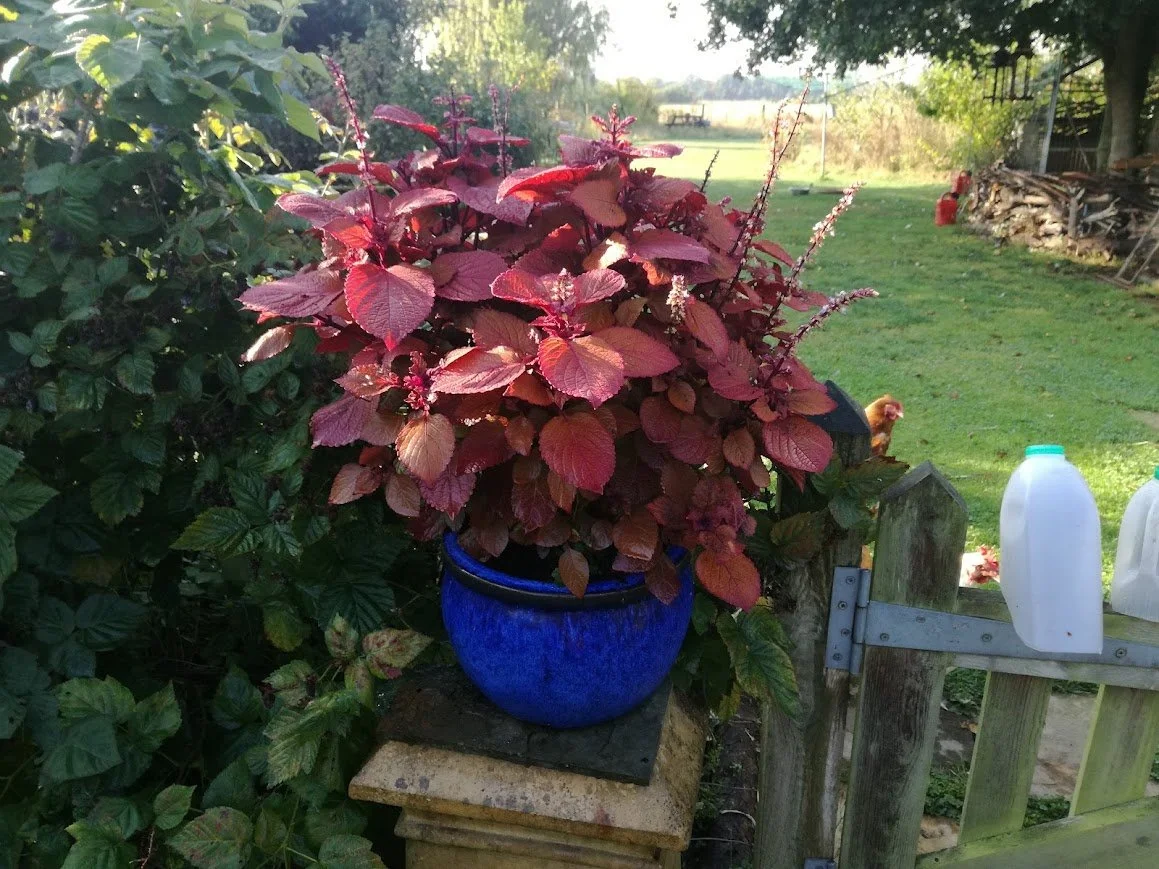
Coleus will rock a pot all on its own. This plant was from ‘Wizard Mix’ seed.
Cornflowers- Hardy annual. Not just blue any more! These come in a good variety of jewel like colours. I particularly like ‘Black Ball’ which is a very deep maroon.
They are usually recommended to be sown direct, like I spare soil for that! I sow seed in small trays in early spring and prick out so I can squeeze them in ones and twos into an already packed jewel colours border. They are great value, beautiful pops of colour and continue flowering into the autumn. Seed is a bit tricky to save because of all the extra bits of spare dry flower you get with it, you can’t really tell what is seed and what isn’t.
Cosmos- Tender annual. Comes in a variety of colours from white through pink to red and now some orangey tones, and different heights, all with very attractive ferny foliage. These end up being big, impressive plants and once they start to flower will carry on until the first frosts.
I think they do best in full sun and regular border soil. Growing them in shade and too rich soil or with too much feeding results in huge lush green bushes and delayed and few flowers.
I’ve saved seed and grown it but similarly the plants were huge and their flowers were late and sparse and colours were a bit meh. I found lout later that this tendency not to flower until late summer (photoperiodism) is what plant breeders were trying to reduce in cosmos, and sowing saved seeds that have resulted from random crosses can undo a lot of this careful selection for the desired traits.
So from now on, duly humbled, I’m going to avail myself of their great work and sow only bought seed.
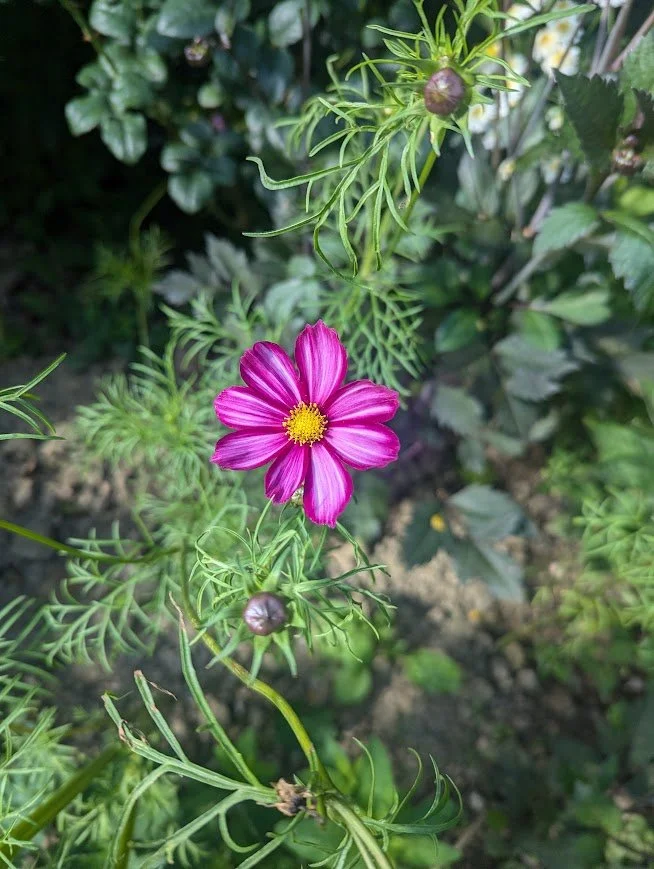
Cosmos bipinnatus ‘Picotee’
Datura wrightii (used to be meteloides)- the Sacred Thorn-Apple. A tender perennial shrub grown as an annual in the UK. Gets up to about 3ft, and looks really impressive. Lovely grey green downy stems and foliage and gorgeous large white flowers that are very strongly fragrant at night as this is a moth pollinated plant in its native Southern US and Mexico.
I’m so sorry not to have a photo of this to show you! It’s happy in any well drained full sun site and in a container. All parts are poisonous, so beware. This is generous with it’s seed, although the pods are a little spiny, so you’ll only need to buy one pack then be self sufficient after that.
Morning glory- Tender annual. Easy to sow and grow especially if you soak the seeds for 24 hours first. A warm windowsill or greenhouse propagator gets them started but I only start seed about 4 weeks before the last frost as they shoot up quickly and twine into a dispiriting tangled mess if they are left waiting too long before planting out.
The flowers positively glow with colour, and that’s why I love them. The variety ‘Grandpa Ott’ is my favourite. It’s also easy to collect the seed from the papery ball like seed pods.
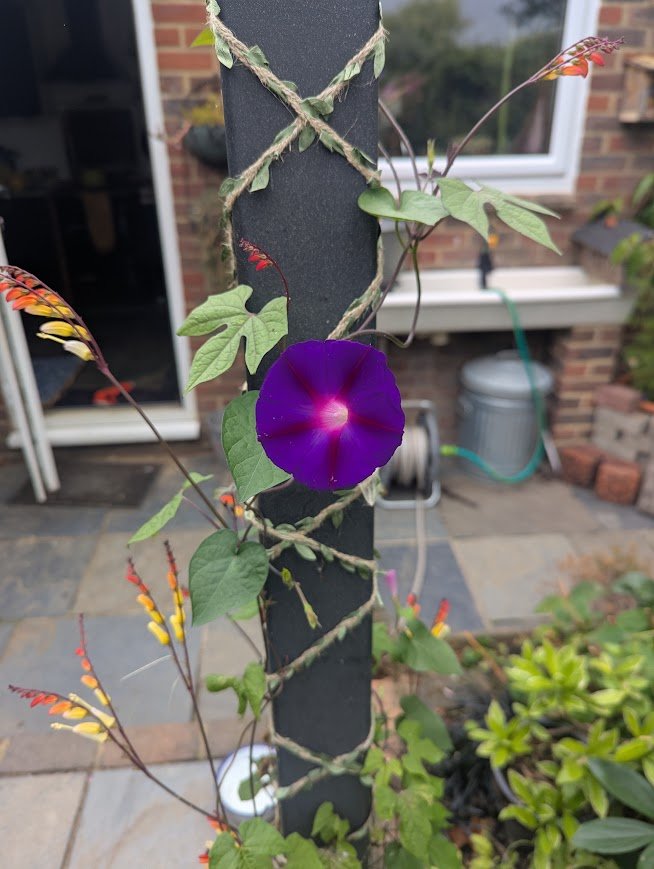
Morning glory Grandpa Ott, and Spanish Flag
Nicotiana sylvestris- the false tobacco plant. I also have seed for a true tobacco plant- Golden Virginia but I’ve not tried growing it yet. I don’t smoke but I bought some as I agree with David the Good that in a Grid Down situation having some tobacco leaf to trade may be a very good thing.
If you haven’t come across David yet- https://thesurvivalgardener.com/ . His books are on Audible and are wonderfully anarchic, informative, and hilarious.
Anyway, moving on, Nicotiana is a tender perennial grown as an annual in UK. Tiny, tiny seed like dust so a bit of a pain to prick out and pot on, but very worth it.
Forms a rosette of big tropical leaves then tall stems of white flowers that are especially fragrant in the evening and over night. Perfect companion to Datura and then lilies if you want to plant a night-scented area for relaxing in the evening.
This self-seeds outside in sheltered areas- and pops up between slabs of my patio. I have a magnificent 3 year old self-sown specimen in the greenhouse that happily overwinters as a rosette then tries to take over every summer.
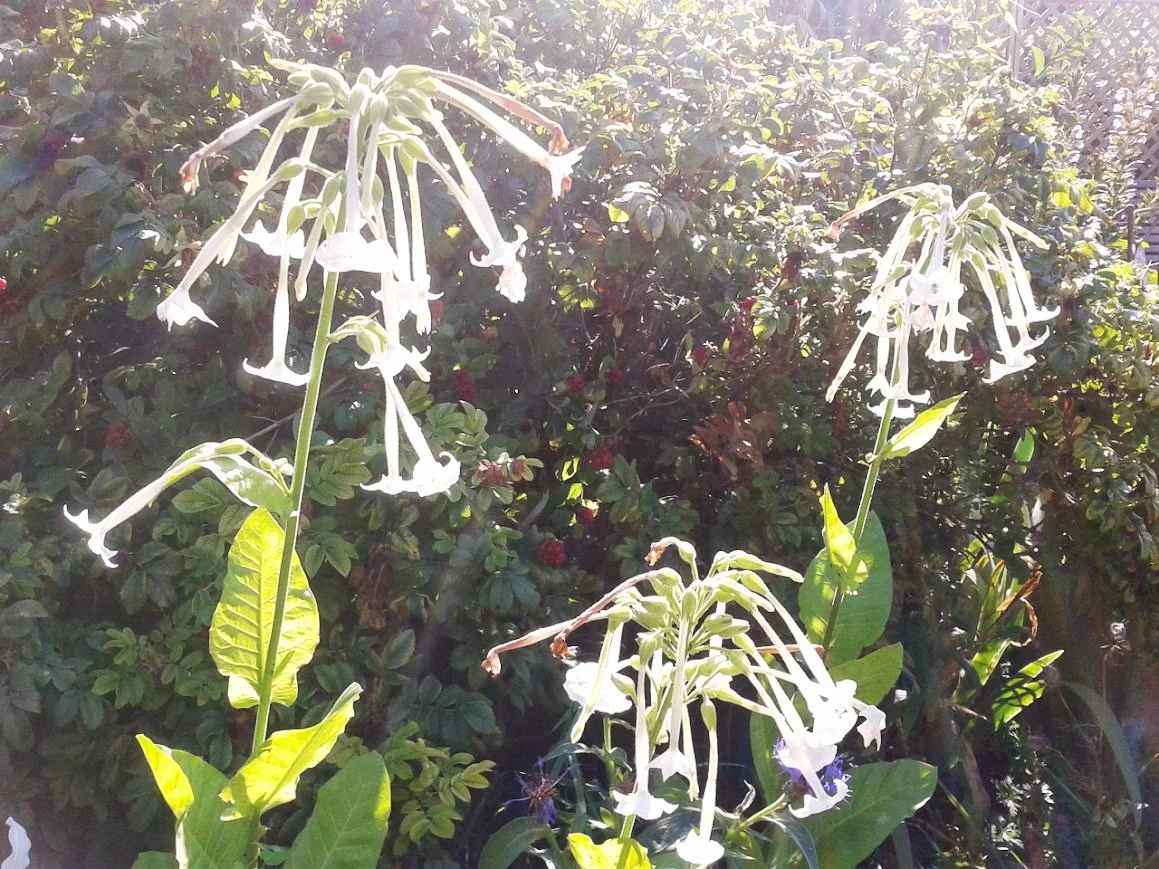
Nicotiana sylvestris- smells as good as it looks!
Phytolacca- the Indian ink plant. Half-hardy annual. I like variety’ Laka Boom’. Easy to germinate, in fact it self-seeded in my veg patch last year and I had a magnificent specimen growing up in amongst the Tromboncino squashes. Lush purple-tinged foliage and bright pink flower spikes followed by shiny dark berries. What’s not to love?
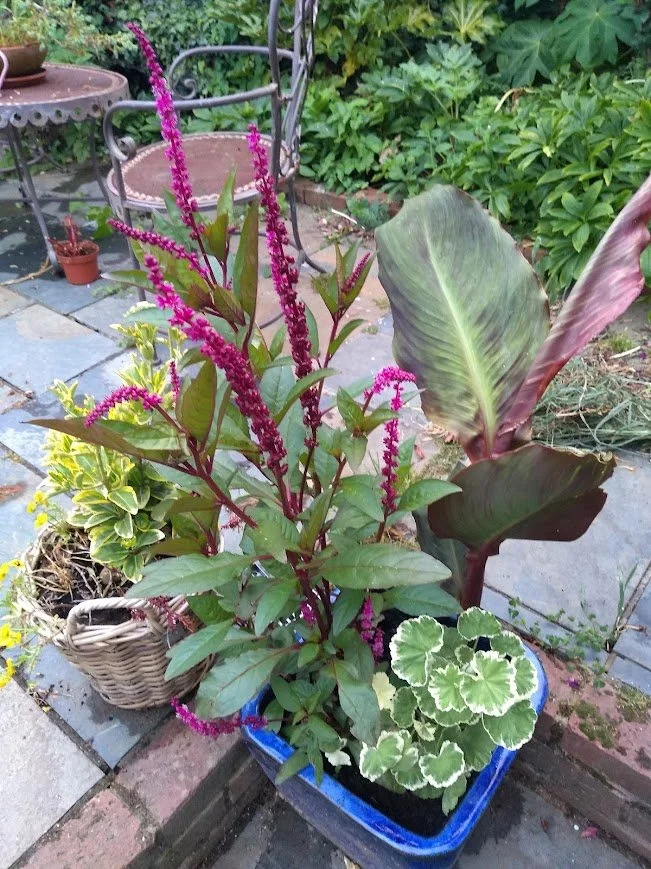
Phytolacca Laka Boom in a pot with a canna and a variegated leaf pelargonium which was originally sold to me as ‘Madame Salleron’. It isn’t, it’s probably ‘Petals’ as it has vibrant pink flowers- I don’t care, it’s gorgeous!
Ricinus communis- the castor oil plant. Tender perennial usually grown as an annual. These germinate easily on a windowsill and grow very rapidly, getting up to several feet high depending on the variety.
Big, lush leaves give a tropical look to the border. It will tolerate part shade quite happily. Seed is easy to collect and re-sow but very poisonous so take care. This year I’ll be sowing my favourite ‘Impala’ cultivar and trying ‘Zanzibarensis’ and ‘Red Giant’.
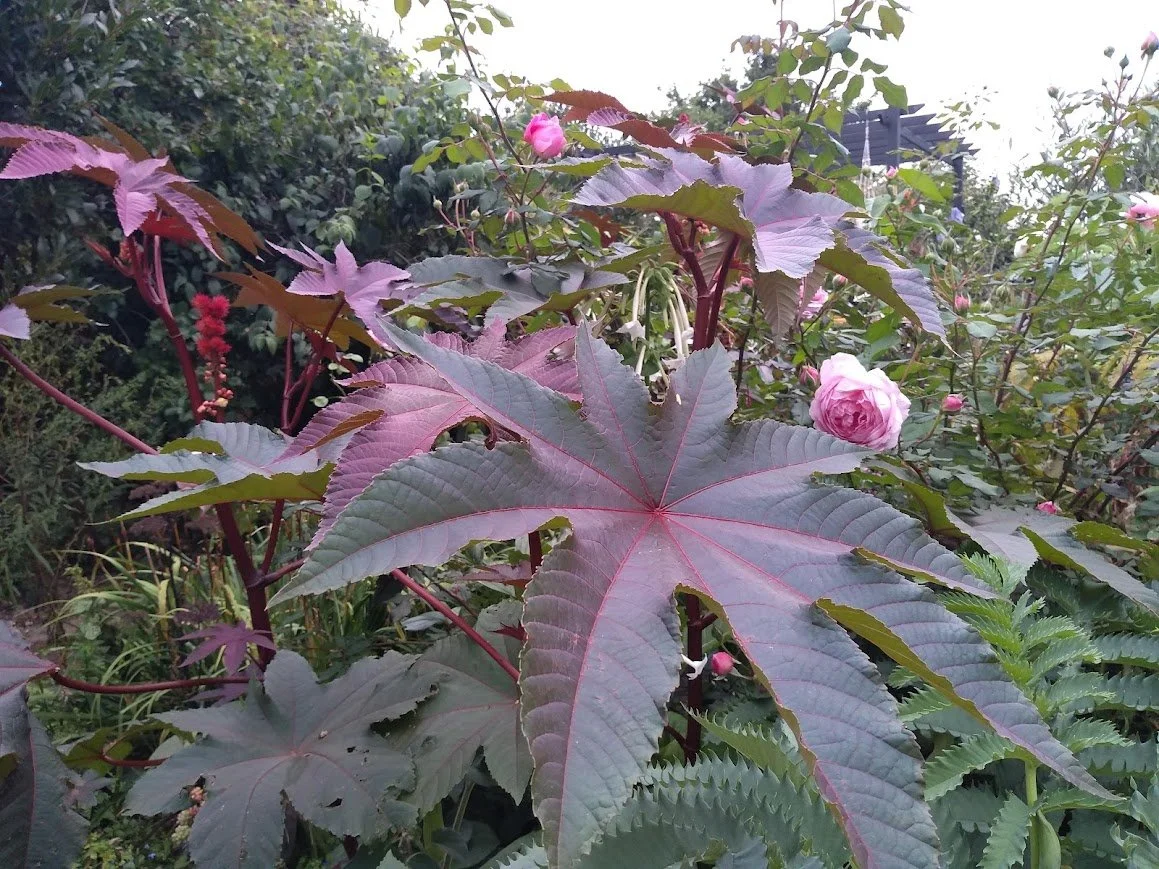
Ricinus ‘Impala’, with Rose ‘Alan Titchmarsh’, and the glaucus sawtooth leaves of Melianthus major just visble underneath.
Spanish Flag- Tender perennial grown as an annual. This is another lovely Ipomea genus climber that can be sown and grown exactly like Morning Glory. It has bracts of flame like flowers that are red fading to creamy yellow hence the name. Seeds are easy to collect and save for next year.
Sweet Alyssum- Hardy annual erupting into a froth of long lasting flowers. It can be a short lived perennial in protected areas. I love these low growing gap fillers and edgers.
For me they’ve replaced lobelia as they seem to grow so much more robustly from seed earlier on. Lovely variety of colours, although I use the white variety ‘Snow Cloth’.
Sunflowers- Hardy annual. These seeds germinate easily and grow quickly into truly impressive plants. I sow seed in April individually so I can put them out as soon as they get big enough.
They do self-seed, so knowing what they look like in the spring garden means you can dig up and move any you find to a space where you want them.
A word of warning: Sunflowers are allelopathic- meaning their roots secrete phytochemicals (phyto = comes from a plant) that restrict the growth of other plants around them, definitely worth checking online what plants are happy being near them before you plant them out.
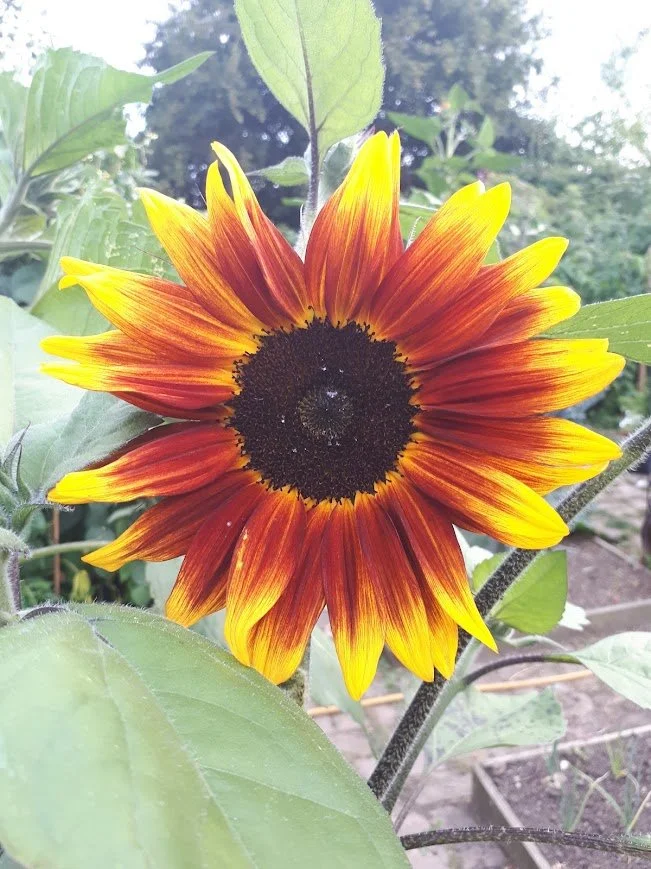
A beautiful bronze sunflower, self sown
Zinnia- Tender annual. I’m a relatively recent convert to these gorgeous gems. They start flowering very quickly and continue to the first frosts, with the plants slowly getting bigger and bushier. Thrive best in full sun, will do well in pots. Slugs and snails adore them so they need a good drenching in garlic spray on a regular basis if you’re putting them somewhere that those greedy gastropods lurk, or just don’t bother and try something else that’s a bit less delicious.
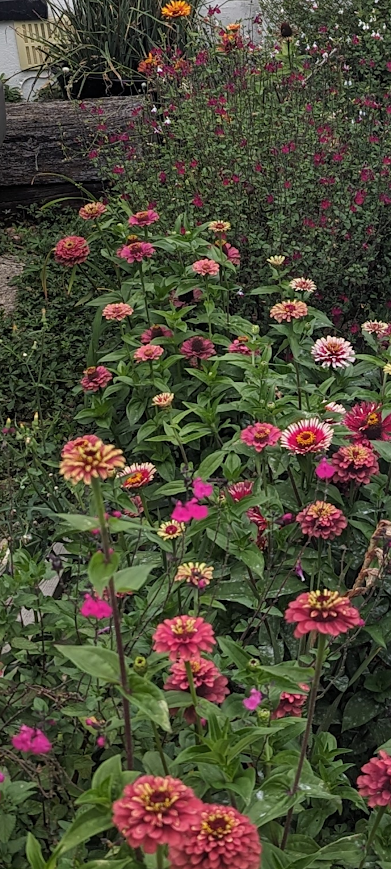
A mix of gorgeous zinnias thriving in a dry hot full sun border
So here they are- my favourite impressive annuals basking in hot sunlight. Definitely something to look forward to!
